


Skincare: what it really is and why taking care of your skin changes everything


[INDICE:h2]

Elisa Avalle – Founder
Skincare: what it really is and why taking care of your skin changes everything
Sometimes you need to start from the basics. Overwhelmed by endless skincare steps trending on Instagram or TikTok, always new products in excessive amounts, super effective new methods, and product sponsors, it’s necessary to start normalizing some good and healthy habits. So let’s start from the beginning: What is skincare and why is it important?
Skincare is not just about serums, creams, cleansers, or gestures learned on social media: skincare is the way we decide to listen to our skin every day. Tight skin means it needs nourishment; red skin needs soothing and calming ingredients; dull skin requires antioxidants and brighteners, and so on. Our skin tells us something every day, and skincare comes from this, not from the desire to chase an aesthetic ideal, but from the concrete need to protect, maintain balance, and support a part of our body that works tirelessly to defend us.
For this reason, talking about skincare seriously means moving beyond superficiality. It means understanding that skin care is not a luxury, not a habit only for beauty lovers, and not even just a female issue: it is a daily act of attention that can help both men and women prevent dryness, impurities, sensitivity, loss of comfort, and early signs of skin stress.
What is skincare?
Literally translated, skincare means “skin care” and encompasses the set of habits that help the skin stay strong, balanced, and able to face what happens to it every day. Protecting the skin from factors like the sun and its UV rays, pollution and oxidation, blue light from screens, and eye fatigue also helps delay natural skin aging and thus delay the onset of spots and discolorations, wrinkles, and signs of aging.
Skin doesn’t live in a lab; it lives with us. It lives through busy days, smog, cold, wind, sun, and air conditioning, but it also lives through nights when we sleep little, stress, and the rush with which we remove makeup poorly or skip this important step altogether. And so everything shows.
Well-done skincare is not meant to transform the face into something artificial. Rather, it serves to bring the skin back to the best conditions to function well. When the skin functions well, it looks healthier, more even, more radiant, and less reactive. Not because it is forced, but because it is supported.
Why is skincare important?
You need to consider the skin as a delicate organ that establishes a boundary between your body and everything that happens outside. The skin is that organ that adapts, reacts, signals imbalances, and often absorbs the weight of our habits even before we notice. That’s why taking care of it is not a secondary act but a concrete form of daily prevention.
Facial skincare helps preserve hydration, skin comfort, and elasticity, essential factors for healthy skin. The goal is to prevent tightness from dry skin, limit impurity buildup on oily or acne-prone skin, improve skin texture, and protect the face from environmental aggressions. The value of skincare lies in observing how the skin changes when neglected or, conversely, when it receives what it truly needs.
Often skincare is only considered when an obvious problem appears. In reality, its most important role comes before. Before the skin becomes dull. Before dryness turns into constant discomfort. Before excesses, mistakes, or bad habits weaken its balance.
Every skin has its own story, its own particularity and uniqueness. Of course, we in the industry often use technical and specific terms like dry skin, combination skin, oily skin, etc., but these are just indications that help identify an issue to treat. In reality, every skin should be treated according to its specificity, and for this reason, consultations on skin type or issues are often sought before starting a skincare routine or treatment. A skincare routine is a necessary habit for every skin, as we said, and it is a practice that tries to accommodate our skin type rather than overturn it or seek drastic solutions. If too many products are added, the routine is changed every week, or exfoliants or actives that are not suitable are overused, we are not doing good for our skin: more does not mean better. Skin does not always need correction; very often it needs to be understood.
Skincare becomes important right here. Not when it complicates, but when it simplifies. Not when it follows the trend of the moment, but when it helps read the real needs of the skin. A well-built routine doesn’t have to be long; it has to make sense.
What a routine should never be
I start from the idea that you already know how to build a basic skincare routine: cleansing, nourishing, and protecting. For this reason, I want to make a broader point, starting from what skincare is not and should never be.
In recent years, skincare has definitely become a trending topic on social media, and this has had positive effects too: more people have started to get informed, use sunscreen, and pay attention to ingredients. However, alongside awareness, a certain confusion has also grown.
Skincare should never become a race to accumulate products. It should not make us feel guilty if we don’t use ten products. It should not push us to treat the skin as a problem to solve quickly. And above all, it should not distance us from common sense. A skin treatment must be carried out consistently for months before seeing results; if we change products following the trend of the moment, we might never see the hoped-for results.
The truth is that skin responds better to consistency than to excess. Gently cleansing, adequately moisturizing, protecting the skin during the day, and choosing formulas suited to your needs remains a much more effective base than any spectacular but inconsistent routine. Consistency in skincare is worth much more than exaggeration.
The essential steps to start from
When asked why skincare is important, the most concrete answer is this: because it helps build a foundation of skin wellness day after day. And to do this, there’s no need to complicate life.
The truly essential steps are few and roughly:
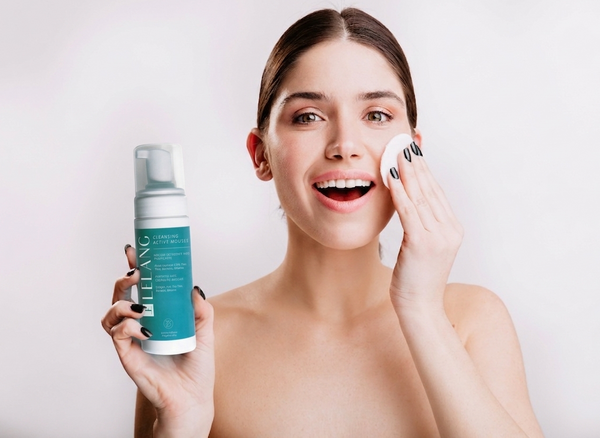
Cleanse the face with a gentle product to remove impurities, excess sebum, makeup residues, and what deposits on the skin during the day. This step is different from just using a makeup remover; it’s a step everyone should do as a basic routine to remove dead cells and stimulate cell turnover.
Moisturize, because even combination or impure skin can be dehydrated and need comfort. To moisturize, you can start with a facial serum, which has a lighter texture and a higher concentration of actives that penetrate deeply, then apply a moisturizing cream that has a more occlusive value and serves to seal in hydration.
Protect, especially during the day, because the skin is continuously exposed to external factors that accelerate stress and fragility. Sunscreen is not optional.
Treat only when necessary, choosing actives consistent with a real need and not a trend of the moment. If you have a specific skin condition, you can follow a treatment or use specific actives for your problem.
This is where an intelligent routine is built: from repeatable gestures, compatible with real life, sustainable over time. Because useful skincare is not the one perfect on paper, but the one we can really maintain, just like many other things in life, like diet or sports, it’s the combination that builds progress. If we had to buy new skincare products every week, it would be a significant financial expense, and consistency might fail after the first purchases.
Conclusion: skincare for everyone
There are still those who think that taking care of the skin means giving too much importance to outward appearance, but taking care of yourself consciously is the opposite of superficiality. It means paying attention to the body’s signals and recognizing that skin also needs balance, respect, and continuity.
After all, the best skincare is the one that reconnects us with a healthy normality and doesn’t ask us to chase unrealistic perfection. It rather invites us to observe, understand, and choose better. To do less, but do it with more sense.
And it’s also how I myself think about skin care: not as a flashy promise, but as a daily dialogue between effectiveness, balance, and respect for skin function. It’s the same idea that guides LeLang in talking about functional cosmetics, meaning formulas designed to accompany the skin in a targeted way without betraying its nature.


RECENT POSTS


