


Exosomes: the new frontier of cell regeneration


[INDICE:h2]
For years, advanced skincare has revolved around a few major players: hyaluronic acid, vitamin C, retinol, peptides. Today, there is a new term increasingly appearing both in aesthetic medicine protocols and in hi-tech serums as well as nutraceuticals: Exosomes. You can find them mentioned alongside various treatments, including those for enlarged pores, spots, fine wrinkles, dull skin, anti-aging, etc. Often with promises of total skin regeneration. But what are they really? And, above all, what do we know from scientific data, not just marketing, when we talk about facial exosomes, exosome serums, and protocols in aesthetic medicine?
In this article, we clarify: starting from biology, moving through clinical studies, and arriving at daily practice, with a special focus on enlarged pores, uneven texture, and support for skin regeneration.
What are Exosomes?
Exosomes are extracellular vesicles produced by the body that transfer vital information and resources between cells, including micro-RNA, growth factors, antioxidant vitamins, and much more. Essentially, cells release exosomes into the surrounding environment to communicate with each other, like biological nanopackages carrying messages: inside them are proteins, lipids, DNA fragments, molecules capable of modulating the behavior of nearby cells. In the context of skin, this means exosomes can influence key processes such as collagen and elastin production, inflammatory response, tissue repair, oxidative stress management, and pigmentation.
Today, these molecules are used for non-surgical skin rejuvenation. They can be applied topically or ingested as supplements to promote collagen production.
These micro-vesicles act on cell repair, new collagen production, and also on pigmentation regulation: they are very versatile and can be best used in combination with other aesthetic treatments such as microneedling, lasers, peels, fillers, and carboxytherapy to enhance results.
There is often talk about exosomes from stem cells, but this can cause confusion: stem cells, such as mesenchymal ones from adipose tissue or other sources, are one of the main factories of exosomes. In recent years, many researchers have shifted focus from the direct use of stem cells to the use of their extracellular vesicles, precisely because exosomes allow harnessing much of their regenerative potential while reducing some risks related to cell manipulation.
What are the effects of Exosomes?
Systematic reviews and experimental studies on exosomes in the skin field show an interesting trend: various types of extracellular vesicles, often derived from mesenchymal stem cells or fibroblasts, are able to:
- stimulate the synthesis of collagen I and III and elastin
- reduce the activity of metalloproteinases (MMP) responsible for extracellular matrix degradation
- improve hydration and barrier function.
This translates into a reduction in wrinkle depth, increased skin elasticity, and a smoother texture, especially when exosomes are used in combined protocols. Exosomes have also proven useful in modulating hyperpigmentation, improving brightness, and making skin tone more even thanks to their mechanism capable of:
- Supporting cell turnover;
- Reducing oxidative stress;
- Modulating inflammation;
- Influencing melanocytes and keratinocytes.
Improved collagen quality restores skin balance, which combines with better sebum control and thus a lower incidence of enlarged pores. In particular, all these abilities are directly linked to protocols combining microneedling and exosomes derived from stem cells.
Studies conducted so far are preliminary and based on few subjects, but it is clear that in controlled settings exosomes have shown enormous potential for deep skin remodeling that reflects on overall skin health, from enlarged pores to skin brightness and wrinkle reduction.
How do commercial exosomes work?
Commercial products may contain exosomes of plant origin, often derived from rose, centella asiatica, aloe vera, or green tea. However, these products are often inappropriately inflated by marketing and present some issues; for example, in plant-derived exosomes, the message contained is not biologically decipherable by human cells, and plant micro-vesicles are much more fragile and often do not withstand heat, time, and packaging.
The term exosomes has exploded on social media and in cosmetic marketing, seeming like a magic word capable of promising deep cellular regeneration. The problem? The speed at which promises multiply often exceeds the pace at which solid clinical studies, standardized and independent, arrive.
Experts therefore warn about some aspects such as:
- the fragility of plant-derived exosomes that may not survive all production, storage, and cosmetic use phases, making a miracle effect as described in some campaigns unlikely;
- the absence, to date, of shared guidelines on exosome type, doses, and optimal protocols, with studies often small, heterogeneous, and difficult to compare;
- the use of claims like deep regeneration, cellular activation, or medical therapy effect in a bottle, which risk blurring the line between cosmetic and medical treatment without providing verifiable scientific references.
As a consumer, the risk is to be seduced by choosing products based on slogans rather than on the complete formulation, brand transparency, and consistency with real skin needs. A more conscious choice always starts with the right questions: Does this product make sense in my routine, or could I achieve similar results with more established actives?
From this perspective, the true advanced approach is not chasing the latest trend but choosing products that combine actives with robust literature such as niacinamide, antioxidant vitamins, peptides, sunscreens, pro-barrier molecules, with any newer technologies, without turning the latter into miraculous promises.
From theory to practice: a regenerating routine with LeLang
After exploring exosomes and marketing limits, it’s time to translate these concepts into a concrete routine, inspired by skin regeneration science but anchored to established and transparent actives.
LeLang Skincare focuses on evidence-based formulas, without excessive claims: niacinamide for pores and sebum, enhanced vitamin C for brightness, peptides for firmness.
Brightness and even tone: FeruliC+HA Serum

FERULIC + HA SERUM Brightening antioxidant serum for the face
based on Vitamin C & Ferulic AcidEFFECTS:
Lightens blemishes
Stimulates c... Discover FERULIC + HA SERUM

FERULIC + HA SERUM Brightening antioxidant serum for the face based on Vitamin C & Ferulic AcidEFFECTS: Lightens blemishes Stimulates c... Discover FERULIC + HA SERUM
For brightness and mild discolorations, FeruliC+HA Serum combines the action of ferulic acid and vitamin C with hyaluronic acid. Ferulic acid enhances the stability of vitamin C, which supports even tone and collagen synthesis, in line with studies on topical antioxidants. Ideal for dull or photo-aged skin.
Dynamic wrinkles and firmness: Botoxil Serum
For fine wrinkles and tone, Botoxil Serum uses botox-like relaxing peptides such as argireline to soften expression lines and support the skin matrix. It does not promise miracles but gradual results on elasticity and firmness, consistent with peptide literature.
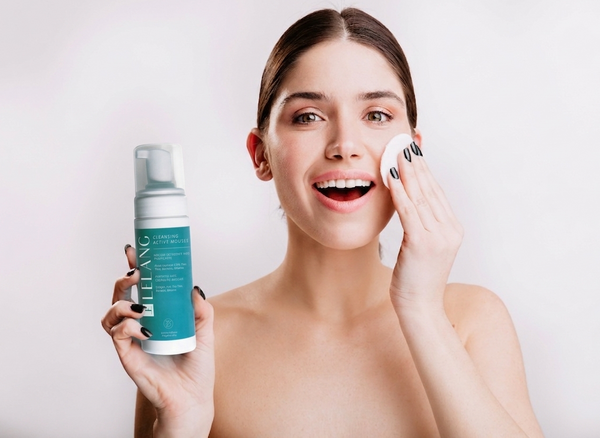
Enlarged pores and texture: Cleansing Active Mousse

CLEANSING ACTIVE MOUSSE Purifying face cleansing mousse anti-imperfections
Reduce enlarged pores
Purifies the skin from impurities
Improves ... Discover CLEANSING ACTIVE MOUSSE

CLEANSING ACTIVE MOUSSE Purifying face cleansing mousse anti-imperfections Reduce enlarged pores Purifies the skin from impurities Improves ... Discover CLEANSING ACTIVE MOUSSE
For pores and uneven texture, Cleansing Active Mousse from the Acnerebal line contains salicylic acid 0.5%, Tea Tree, burdock, and betaine. It clears pores, smooths the surface, and controls sebum without overly drying the skin. The treatment against acne and excess sebum is completed by Acnerebal Serum

ACNEREBAL SERUM Sebum-normalizing serum and reduction of enlarged pores based on Salicylic Acid, Zincidone, Niacinamide Reduce enlar... Discover ACNEREBAL SERUM

ACNEREBAL CREAM Sebum-normalizing, evening and mattifying cream based on Azeloglicina®, Zincidone®, Niacinamide Reduces sebum produc... Discover ACNEREBAL CREAM
Conclusion: a routine that benefits your skin
The new scientific frontiers of skincare capture everyone’s attention, and it is right to look towards new interesting horizons of advanced skincare. Exosomes show they can be, over time, a valid solution for skin care provided they are studied and included in a standard usable by cosmeceutical companies.
Meanwhile, it is important to understand that skincare ingredients like Niacinamide, hyaluronic acid, vitamin C, used with consistency and judgment, can represent a more than effective solution for the topical treatment of particular skin conditions.
Consistency is the key to the healing process and, above all, trusting companies that care about research and the choice of quality, transparent, and evidence-supported cosmeceutical ingredients. Discover partner pharmacies where you can find LeLang products or book a free consultation about your skin to set up an effective routine.


RECENT POSTS


