


[INDICE:h2]
Acne is one of the most widespread skin conditions in the world and is characterized by the formation of pimples, blackheads, and other blemishes. It can appear on the chest and back, but it mainly affects the face.
Acne is often accompanied by significant emotional distress and psychological effects. That is why understanding its causes and management strategies can make a real difference.
One important premise: acne is a dermatological condition, not merely a cosmetic concern. In mild cases, a well-designed skincare routine can significantly improve the situation; in moderate and severe cases, a dermatologist is needed, as they can prescribe treatments that cosmetics cannot replace. This article explains the mechanisms and what cosmetics can do — it is not a treatment protocol.
What is acne
Acne results from the blockage of hair follicles by sebum, dead skin cells, and bacteria. This is how comedones form: open, blackheads, when the pore remains open and its contents oxidize on contact with the air; closed, whiteheads, when the pore is completely blocked and the material remains trapped beneath the surface.
The formation of comedones is a physiological process, but certain factors can amplify it. Increased sebum production may be caused by hormonal changes — puberty above all — or by endocrine imbalances.
Acne or just pimples?
The distinction is more practical than academic. An isolated pimple that appears before your period or after a difficult week is an occasional lesion. We speak of acne when lesions are numerous, recurring, and present simultaneously at different stages — comedones, papules, and pustules together — on skin that tends to have clogged pores. This distinction matters because it changes the appropriate response: with an occasional pimple, it is enough not to make it worse; acne requires a consistent strategy.
What are the causes
The factors are multiple, and there is rarely a single cause.
Hormonal changes are the main driver, which is why acne is associated with adolescence. But it does not only affect that stage: adult acne is increasingly common, especially among women.
Some medications, such as corticosteroids and androgens, can alter the hormonal balance and promote the onset of acne.
Genetics affects predisposition and severity: people whose parents or siblings have a history of acne are more likely to develop it due to variations that make the skin more susceptible to clogging and inflammation.
Diet and stress also matter: a diet rich in sugar and refined products raises insulin levels and can stimulate sebum production, while stress triggers hormonal imbalances and inflammation.
Finally, seasonality has more of an impact than you might think: many people notice an improvement in summer followed by a worsening in September. This is not a coincidence, but a specific phenomenon that we explored in depth in the article on sun, acne, and the late-summer rebound effect.
How many types of acne are there
- Comedonal acne: whiteheads and blackheads.
- Papulopustular acne: papules and pustules on the face, chest, and shoulders.
- Nodulocystic acne: the most severe form, with deep nodules and cysts.
Comedonal acne
Whiteheads form when pores become clogged, trapping sebum, bacteria, and dead skin cells beneath the surface and creating small, flesh-colored bumps.
Blackheads are similar but appear dark due to oxidation: contrary to popular belief, they are not caused by dirt. They are concentrated on the nose, chin, and forehead—the T-zone, where sebum production is higher.
Papulopustular acne
These are inflammatory forms. Papules are small, red, tender bumps that form when the pore walls rupture due to inflammation. Pustules are inflamed lesions containing pus with a whitish center.
The most important rule: do not squeeze. Manipulation worsens inflammation, spreads the contents into the surrounding layers, and significantly increases the risk of permanent scarring. It is the single behavior that causes the most long-term damage.
Nodulocystic acne
Nodules are large, solid lesions that develop deep in the skin, are hard to the touch, and persist. Cysts are similar but contain fluid and are often larger and more painful.
In both cases, the risk of scarring is high and a dermatologist is needed: these forms require medical treatments, either topical or systemic, and no cosmetic product can manage them.
Types of pimples: how to recognize them in the mirror
The forms of acne described above are the clinical classification. In the mirror, however, you see individual pimples, and recognizing them serves one purpose: understanding which can be managed with skincare, which should simply be left alone, and which should be shown to a dermatologist.
| Type of pimple | What it looks like | Where it forms | What to do |
|---|---|---|---|
| Blackhead (open comedone) | Small, flat, dark spot that is not painful | In the open pore, especially in the T-zone | Consistent exfoliation with salicylic acid; do not squeeze |
| Whitehead (closed comedone) | Small, skin-colored or whitish bump | Below the surface, in a closed pore | Regular exfoliation and patience: it takes weeks |
| Papule | Red, hard, painful bump with no white tip | In the inflamed pore wall | Do not touch it; use a gentle, sebum-regulating routine |
| Pustule | Red bump with a white-yellowish center | Superficial inflammation with purulent contents | Do not squeeze it: it will resolve on its own within a few days |
| Under-the-skin pimple | Painful swelling with no visible head | Deep inside the follicle | Do not squeeze it; if it often returns in the same spot, see a dermatologist |
| Nodule | Large, hard, deep lesion that lasts for weeks | In the dermis | Dermatologist |
| Cyst | Soft, fluid-filled, painful lesion | In the dermis | Dermatologist |
The rule that ties the table together: the deeper the pimple, the less it is a cosmetic issue. Blackheads and whiteheads respond well to a consistent routine; occasional papules and pustules can be managed without making them worse; nodules and cysts, even if isolated, can easily leave scars and should be assessed by a doctor.
Where acne appears and what it suggests
The distribution of lesions can provide some useful indications, but it should not be turned into the maps circulating online that associate each area with an organ: those have no scientific basis.
- T-zone (forehead, nose, chin): this area has the most sebaceous glands, so it is the most prone to comedones at any age;
- Jawline, chin, and neck: the typical distribution of hormonal acne, common in adults and often cyclical;
- Cheeks: this is the area most affected by external factors, from phones and pillows to overly occlusive products;
- Forehead with small, uniform lesions: this may be caused by hair products, hats, or bangs.
The long-term impact on the skin
In addition to the immediate effects — redness, swelling, and pain — poorly managed acne can leave lasting marks: more or less deep scars and post-inflammatory hyperpigmentation, meaning the dark spots that remain after the lesion has healed.
The distinction between the two matters: a mark is flat, affects only the color and in most cases fades over time, all the faster the more consistently sunscreen is used. A scar is a change in the skin's texture, either indented or raised, and cannot be resolved with a cosmetic product: medical treatments are the appropriate option.
Acne-prone skin also tends to thicken and appear asphyxiated and dull due to persistent inflammation.
The routine for acne-prone skin
If you are looking for specific guidance for men's skin, which has different needs due to its thickness, sebum production and shaving, you will find everything in the guide to acne and oily skin in men. For the complete protocol for enlarged pores, see the oily skin routine.
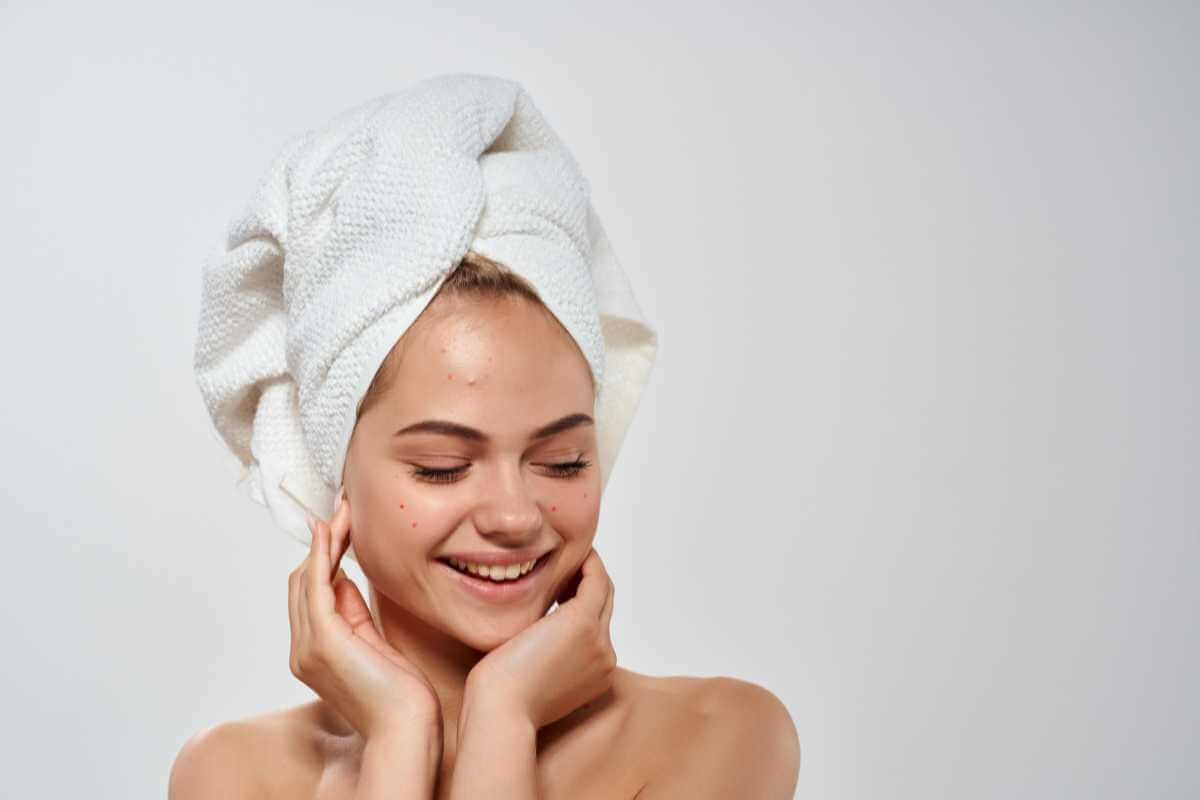
Cleansing and exfoliation
Cleansing removes excess sebum, impurities and residue that can clog pores. Regular exfoliation removes dead cells that accumulate in the stratum corneum.
The most suitable exfoliants are beta-hydroxy acids (BHAs), particularly salicylic acid: as it is oil-soluble, it penetrates sebum and acts inside the pore, with comedolytic action.
Cleansing Active Mousse contains 0.5% salicylic acid, together with tea tree oil, burdock and betaine.

CLEANSING ACTIVE MOUSSE Facial cleanser with salicylic acid Purifying mousse with Tea Tree Oil, Burdock and Betaine Reduces the appearance o... Discover CLEANSING ACTIVE MOUSSE
Hydration, which should not be skipped
Many people with acne-prone skin worry that moisturizing will make things worse. The opposite is true: skin deprived of its lipids compensates by producing more sebum. Lightweight, non-comedogenic creams are preferable, with humectants such as panthenol - soothing and repairing - or betaine.

ACNEREBAL CREAM Cream for hormonal acne and oily skin, mattifying effect Sebum-regulating cream with Azeloglycine, Zincidone® and Nia... Discover ACNEREBAL CREAM
The active ingredients that help
Azelaic acid is one of the most studied active ingredients for acne-prone skin: it acts simultaneously on follicular keratinization, inflammation, and post-inflammatory hyperpigmentation. In cosmetic formulations, it is often used in the derived form of azeloglycine, which is water-soluble and better tolerated with the same efficacy.
Zincidone combines zinc and L-pyrrolidone carboxylic acid: the former has a sebum-regulating action, while the latter strengthens the skin barrier.
Niacinamide helps reduce residual marks and redness and helps regulate sebum production. Its synergy with salicylic acid is among the most studied for blemish-prone skin.

ACNEREBAL SERUM Serum with salicylic acid and niacinamide For oily skin and enlarged pores, with Zincidone®, Burdock and Provitamin B... Discover ACNEREBAL SERUM
The complete protocol for the line is described in the article on juvenile acne and the Acnerebal protocol.
Mistakes that worsen acne
- Over-cleansing: cleansing more than twice a day with harsh products has the opposite effect, because the skin responds by producing more sebum;
- Drying out the skin at all costs: alcohol and degreasing formulas provide immediate relief followed by worsening weeks later;
- Changing products every ten days: no active ingredient shows its true effect before a month;
- Layering too many active ingredients: acids, retinoids, and antibacterial agents used together irritate the skin barrier and increase inflammation;
- Skipping sunscreen: the sun clears lesions for a few weeks and then causes them to return worse, while also darkening residual marks.
Lifestyle
A balanced diet rich in fruit, vegetables, and whole grains supports skin health. Regular physical activity helps manage stress, which is one of the factors that worsen the condition. And even with acne-prone skin, you should use sunscreen: in this regard, it is useful to know how to prevent worsening after summer.
Patience is also essential: results on blemish-prone skin take weeks, not days, and changing products too quickly is the best way to never see any improvement.
Frequently asked questions about acne
How long does acne take to improve with a proper routine?
The first differences in texture and comedones can be noticed after three or four weeks. A significant change takes two or three months, because it corresponds to several complete skin-renewal cycles. Anyone evaluating a product after ten days is measuring chance, not its effect.
Does diet really affect acne?
The strongest evidence concerns foods with a high glycemic index — sugars and refined flours — which several studies associate with a worsening of the condition. There is also some evidence concerning milk, particularly skimmed milk. Chocolate itself is far less implicated than tradition suggests: it is the sugar that accompanies it that matters.
Should you remove makeup even if you are not wearing makeup?
Yes. Oxidized sebum, particulate matter, sunscreen residue and hair products build up on the skin. Evening cleansing does not remove makeup: it removes the day.
Does makeup worsen acne?
Not in itself, if the formulas are non-comedogenic and makeup is carefully removed in the evening. Wearing makeup is often what allows you to leave the house feeling comfortable during a difficult period, and there is no reason to give it up.
When is it time to see a dermatologist?
When painful nodules or cysts appear, when scars remain, when acne extends to the back and chest, or when three months of a proper skincare routine have changed nothing. Also when it affects your mood and social life: that is just as valid a reason as the others.
Is adult acne treated like teenage acne?
No, and treating it the same way is the most common mistake. Adult skin is thinner, often more reactive and dehydrated: heavily degreasing products designed for teenagers damage it. The details are in the article on adult acne.
15-Minute Free Consultation with the Founder
Want to find out which routine is right for your acne-prone skin? Book a free virtual skincare consultation with Elisa Avalle, founder of LeLang.