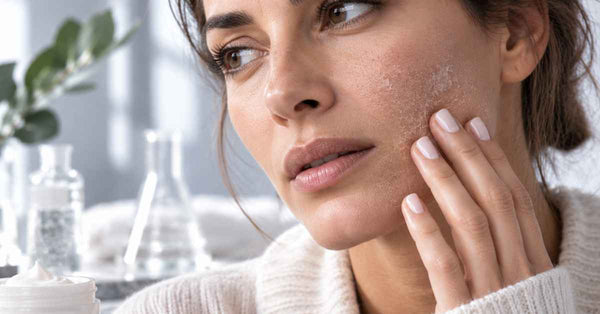



There is a moment, usually in the evening after a day outdoors, when your skin looks fine in the mirror but doesn’t feel fine to the touch: it feels tight, stings when you apply your usual cream, and has a roughness that wasn’t there the day before. It’s not sunburn. It’s an alarm switched on at the nervous-system level, and that is what neurocosmetics work on.
This article explores one specific aspect: why the barrier struggles to repair itself when the skin remains in a state of alert, and how to intervene. If instead you’re looking for a practical list of what to apply and what to avoid in the hours following sun exposure, with a step-by-step protocol, you’ll find it in the guide on what to apply to sensitive skin after sun exposure.
[INDICE:h2]
Why the barrier doesn’t repair itself
Sun damage doesn’t end when the redness fades. In sensitive skin, something less visible remains switched on: a state of low-grade chronic inflammation, known in the literature as inflammaging.
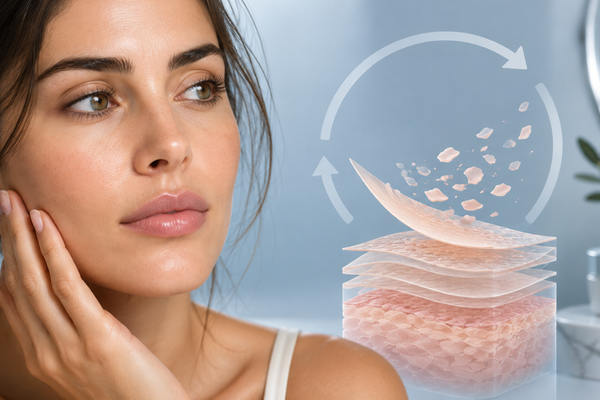
It is a self-perpetuating condition. A damaged skin barrier allows more water and irritating stimuli to pass through; these keep the inflammatory response active; inflammation, in turn, hinders the rebuilding of barrier lipids. As long as the cycle continues, moisturizing does little: it’s like filling a leaky bucket.
This is why reactive skin at the end of summer may be more fragile than it was in June, even without ever getting sunburned. The damage wasn’t acute: it was cumulative.
The cortisol produced by the skin
This is where the part that traditional cosmetics overlooks comes in. Skin cells exposed to stress from UV rays, heat, and dehydration produce cortisol on their own: not the cortisol released by the adrenal glands, but cortisol generated locally.
Skin-derived cortisol keeps inflammation high and slows barrier repair. It has been documented that a damaged barrier repairs more slowly during periods of stress: the mechanism is the same, and it explains why the same sun exposure can have different consequences depending on what you are going through at the time.
Neurocosmetics emerged precisely from this observation: if nerve signals keep inflammation active, it is possible to act on that signal instead of merely mitigating its effects. It’s the difference between switching off the alarm and putting your fingers in your ears.
Useful neurocosmetic active ingredients after sun exposure
The most studied active ingredient in this field is Tephrosia purpurea seed extract. In the manufacturer’s in vitro tests, it reduced cortisol release by keratinocytes and stimulated the production of beta-endorphins, neuropeptides with a calming effect.
However, the most relevant data for anyone returning from the beach comes from the clinical study: conducted in summer and double-blind against a placebo, it measured skin redness 2.4 times lower with a spectrocolorimeter after four weeks compared with the placebo, while redness in the untreated area increased.
The ritual that begins in the shower
There is a practical reason to start with the body: after a day in the sun, sensitive facial skin does not tolerate further handling well, while showering is unavoidable. The Relax line’s Shower Gel contains Tephrosia purpurea and allows you to introduce the active ingredient without adding another step to your routine.

RELAX SHOWER GEL Moisturizing bubble bath With neurocosmetic ingredients, it promotes relaxation Gently cleanses Moisturizes and soot... Discover RELAX SHOWER GEL
In the evening, a cleansing oil removes sunscreen and impurities through lipid affinity without affecting an already stressed barrier. Use cool or barely lukewarm water, never hot.

CLEANSING GENTLE OIL Rich cleansing and makeup removing gel oil for a deep cleansing, protects the hydrolipidic barrier Protects the skin... Discover CLEANSING GENTLE OIL
Nutralight Sensitive works on the complementary side: panthenol, bisabolol, and niacinamide rebuild lipids while the neurocosmetic active ingredient lowers the inflammatory signal. Together, they close the cycle from both sides.

NUTRALIGHT SENSITIVE Soothing and repairing face cream with thermal water from the Piedmont Alps – ideal for sensitive and reactive skin ... Discover NUTRALIGHT SENSITIVE
For the body, the cream from the same line extends the effect to the areas most exposed.

RELAX BODY CREAM Moisturizing body cream With neurocosmetic ingredients, it promotes relaxation Improves stressed skin Deeply nouris... Discover RELAX BODY CREAM
How long does it take?
Rebuilding barrier lipids generally requires two or three weeks of consistent treatment, not two or three days. Subjective relief comes sooner—the feeling of tightness subsides within a few days—but the barrier itself rebuilds according to the pace of cell renewal.
This is why it is best not to stop as soon as you feel better: that is exactly when the work is only halfway done.
Frequently asked questions
What is neurocosmetics as applied to sun damage?
It is an approach that, rather than simply moisturizing and soothing, uses active ingredients capable of interacting with the skin’s nervous system to reduce the signals that keep the skin in an inflammatory state. It makes sense for sun damage because exposure activates the local production of cortisol, which in turn slows barrier repair.
Why does my skin react badly even without sunburn?
Because the relevant damage is often subclinical: increased transepidermal water loss and low-intensity inflammation, both invisible in the mirror. The most reliable signal is not color but sudden reactivity to products you usually use: a cream that was well tolerated until yesterday but stings today.
Do I need a neurocosmetic product, or is a good soothing cream enough?
A good barrier cream remains the foundation and is sufficient in many cases. The neurocosmetic approach adds value when reactivity persists despite moisturizing, or when you are also experiencing personal stress: in those cases, you are working on two fronts instead of one.
Can it be used together with other treatments?
Yes, neurocosmetic active ingredients do not exfoliate or increase photosensitivity, so they work well alongside the rest of your routine. However, exfoliating acids and retinoids should be paused in the days following sun exposure.
In summary
When the skin barrier is compromised by the sun, adding harsh active ingredients makes the situation worse. The effective approach is twofold: rebuild the lipids and reduce the inflammatory signal that hinders their reconstruction. With consistent use, three weeks are enough to restore the skin to good condition.
Prevention remains the best measure: for reactive skin, the choice of sunscreen matters, and we discuss it in the guide to chemical and physical sunscreen filters.
You can also find LeLang products in partner pharmacies throughout Italy.
Free 15-minute consultation with the founder
Does your skin react badly after sun exposure? Book a free virtual skincare consultation with Elisa Avalle, founder of LeLang.