

The skin around the eye is the thinnest on the face and the first area to show signs of aging. This applies to everyone, men and women alike. What’s different for men is that almost none of them put anything on it.
The real question isn’t which one to buy, but whether you need it. The short answer: it works for puffiness, dehydration, and fine lines; it can’t do anything about dark circles caused by the shape of your eye socket. You can tell the difference between the two in ten seconds in the mirror, and it’s worth knowing before you spend your money.
[INDICE:h2]
Does eye cream really work?
It depends on what you expect, and it’s worth distinguishing four different situations that are all called “dark circles.”
- Puffiness in the morning caused by fluid retention: yes, an eye cream with de-puffing ingredients makes a visible difference, and you’ll see it quickly.
- Fine lines and dehydrated skin: yes. This is the easiest result to achieve, because hydrated skin reflects light differently.
- Vascular dark circles, the bluish tint caused by visible microcirculation: partially. They can be reduced, but not eliminated.
- Structural dark circles and sagging bags, meaning the shadow cast by the tear trough or the fatty pad that slips forward: no. No cream can change a shadow or an anatomical structure. This is a medical matter, and anyone promising otherwise is selling you an unrealistic expectation.
The test that clears things up: gently pull the skin under your eye toward your temple. If the darkness lightens, it’s vascular and responds to de-puffing ingredients. If it looks the same, it’s pigmented and needs brightening ingredients. If its shape changes but not its color, it’s a structural shadow and cosmetics have little effect.
Anyone expecting to make a structural dark circle disappear with a cream will be disappointed and conclude that eye cream is useless. In reality, they were asking the right product for the wrong thing.
Why the eye area is so noticeable
The skin in this area is thinner and more fragile than the rest of the face, has fewer sebaceous glands, and reacts more quickly to fatigue. When you don’t get enough rest, the under-eye area looks darker or puffier, and your face loses that rested look that conveys energy.
It’s also why it’s the first area of the face to age: it moves thousands of times a day as you blink, and has a more fragile barrier to protect.
Bags and dark circles aren’t the same thing
This is the distinction everything starts with. Bags are puffiness linked to fluid retention, fatigue, or predisposition. Dark circles are a matter of color and can be due to microcirculation, skin transparency, or pigmentation. For the full picture, read the article on under-eye bags and dark circles.
Why it's overlooked
Men's skincare focuses on cleansing, shaving, and at most, moisturizing. The eye area is left out because it's seen as optional. In reality, because of its central position, it's the area that changes the overall impression of the face more than any other: a tired-looking gaze makes the whole face seem tired, even when the skin is in good condition.
Dark circles in men: what causes them and what makes them worse
The causes aren't male or female, but some habits have a greater impact on those who've never used anything on the area.
- Short or irregular sleep: the real cause of morning puffiness. When you lie horizontally, drainage slows down and fluid builds up where the skin is looser.
- Salt and alcohol in the evening: they cause water retention, and the eye area is the first place it shows.
- Hours in front of a screen: you blink less, your eyes get dry, the muscles get tired, and you squint. Fine lines mostly start here.
- Sun exposure without sunglasses: it's the most underestimated factor. Anyone who drives, runs, or plays golf without dark lenses accumulates sun damage exactly where the skin is thinnest, and squints for hours.
- Rubbing your eyes, because of allergies or out of habit: it's repeated mechanical trauma to skin that can't tolerate it.
- Smoking: reduces oxygen supply to the microcirculation and darkens vascular shadows.
A good night's rest, hydration, and a pair of sunglasses affect the appearance of the eye area just as much as the product you apply. Skincare works best when it doesn't have to make up for everything on its own.
A note for those who drink a lot of coffee and still have dark circles: caffeine applied to the skin and caffeine you drink have nothing to do with each other. The former acts locally on circulation in the area; the latter, if consumed in the evening, shortens sleep - and short sleep is the main cause of morning puffiness. Coffee at eleven at night makes dark circles worse, not better.
How to choose an eye cream for men
It’s the most frequently asked question, and the honest answer is that there’s no single best option: the right one is the one that suits your concern. Four criteria, in order of importance.
- The problem, not the product. Try the skin-stretch test and start there. De-puffing ingredients for puffiness or vascular shadows; tone-evening ingredients for pigmentation; peptides for expression lines.
- Eye-area tolerance. This is the technical criterion that really distinguishes an eye cream from a face cream: formulas for this area are tested to avoid irritating the eyelid margin, where the product can migrate overnight.
- Texture. On a man’s face, which produces more sebum, a formula that’s too rich under the eyes feels uncomfortable and is noticeable. A fast-absorbing texture is better.
- Consistency. This area responds to regular use, not intensive treatments. A product that bores you after two weeks is less effective than a simpler one you use for six months.
To see the available formulas, explore the eye creams across the full range.
Men’s eye cream for bags and dark circles: what to look for in the INCI
Anyone looking for a cream for under-eye bags and anyone looking for a cream for dark circles is asking for two different things. The first is dealing with fluid, the second with color, and the ingredients that address them aren’t the same. Before buying, it’s worth checking the INCI with this table alongside it.
| What you see in the mirror | Ingredients to look for in the INCI | What to expect |
|---|---|---|
| Under-eye bags and morning puffiness | Caffeine, Acetyl Tetrapeptide-5, aescin (horse chestnut) | Visible difference in one or two weeks, if the puffiness is caused by fluid retention |
| Bluish dark circles (vascular) | Caffeine, ingredients that support microcirculation | Fades, but doesn’t disappear |
| Brown dark circles (pigmented) | Niacinamide, stabilized vitamin C, licorice extract | Results are slow, appearing after eight to twelve weeks, and only with sunscreen |
| Crow’s feet | Peptides such as Acetyl Hexapeptide-8 (Argireline) and palmitoyl peptides | Softer-looking expression lines with consistent use |
| Thin skin that feels tight | Hyaluronic acid, glycerin, panthenol | Immediate comfort, less noticeable fine lines |
If you have more than one concern at a time, as is most common after age thirty-five, look for a formula that combines a draining active ingredient and a peptide: this combination addresses puffiness and expression lines in one step.
The best eye cream for men: three signs to look for
- The active ingredients are listed by name in the INCI, not just promised on the label with a generic “anti-fatigue” claim.
- The texture is lightweight, a serum or gel cream that absorbs in under a minute and doesn’t leave the area shiny.
- The format is designed for the area: a tube, airless dispenser, or applicator, rather than a jar you dip your fingers into every day.
An “eye cream for men” doesn’t need a different formula as a rule: the skin under the eye is just as thin in men as in women. The packaging and, sometimes, the texture are what differ. What matters is what’s in the INCI, not the color of the bottle.
How to use it
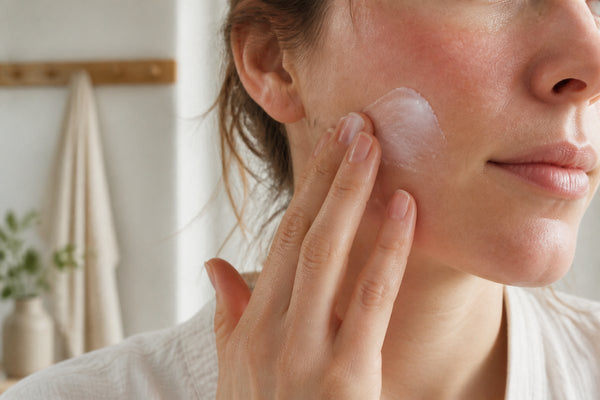
The treatment works best when it’s simple. Use it after cleansing and before face cream, apply gently, and incorporate it into your routine as naturally as washing your face.
The serum
Formula Eyes Duo Peptide is designed to support this area when puffiness, dark circles, and signs of fatigue appear.

FORMULA EYES DUO PEPTIDE Anti-wrinkle eye contour serum for puffiness and dark circles Fragrance-free peptide booster: apply first, before you... Discover FORMULA EYES DUO PEPTIDE
Contains Acetyl Hexapeptide-8 (Argireline), which acts on expression lines, and Acetyl Tetrapeptide-5, formulated to help drain fluids. It is enriched with caffeine, hyaluronic acid, soothing bisabolol, and bromelain.
The texture absorbs quickly: simply tap it on with your ring finger, the finger that naturally applies the least pressure, moving from the inner corner outward along the bone and never over the movable eyelid.
The supporting cream
Vitis Eyes Contour complements the serum with a more comforting treatment, suitable for those also looking for pro-aging support.

VITIS EYES CONTOUR Lifting eye contour cream for wrinkles, puffiness and dark circles Moisturizes and nourishes the delicate skin aroun... Discover VITIS EYES CONTOUR
It combines the same peptides with Vitis Vinifera, grapeseed oil and resveratrol, with antioxidant action against free radicals.
For an overall anti-aging approach, see the guide to an anti-aging routine for men. If you’re starting from scratch, find the basics in the practical guide to men’s skincare.
Mistakes to avoid
- Using face cream around the eyes too: facial formulas are often too rich for this area and can migrate into the lash line.
- Rubbing, whether when applying the product or removing makeup.
- Using it sporadically: this area responds to consistency, not intensive treatments.
- Applying it too close to the eye: the product migrates inward on its own, so apply it along the orbital bone.
Frequently asked questions
At what age should you start using eye cream?
There’s no set age: what matters is what you see in the mirror. If the area looks puffy in the morning, dark circles remain even after a good night’s sleep, or the first fine lines appear when you smile, it makes sense to start - this often happens as early as ages 25 to 30, especially with irregular sleep or many hours in front of a screen. Starting earlier won’t do any harm; starting once the signs are well established makes progress slower.
Why do my eyes get puffy in the morning?
At night, when you're lying down, fluid drainage slows and fluid builds up where the skin is looser. Factors that make it worse include salt in the evening, alcohol, too little sleep, and sleeping on your stomach. If the puffiness goes down over the course of the morning, it's physiological, and a slightly higher pillow is the most effective remedy. If it lasts all day or is always there, it's more likely to be structural; cosmetics can improve its appearance, but not address the cause.
Does eye cream get rid of dark circles?
They reduce them, but don't eliminate them, and how much depends on the type. For vascular dark circles—the ones that lighten when you stretch the skin—draining actives and caffeine deliver visible results. With pigmented dark circles, the focus is on evening out skin tone, and progress is slower. For structural dark circles, caused by the shape of the eye socket, cosmetics make little difference: it's best to know this before expecting what no cream can deliver.
Is a lightweight face cream enough?
It's not about how lightweight it is, but about eye-area tolerance: eye creams are tested to avoid irritating the lash line, where cream tends to migrate during the night. Some active ingredients found in face creams, such as retinoids or exfoliating acids, are often too harsh for that skin. If you use a face cream all over your face, at least avoid applying it under the eyes.
How long does it take to see results?
With puffiness and hydration, you can see a difference within one or two weeks. Fine lines and skin tone take eight to twelve weeks of regular use, because that's how long it takes for the skin to renew itself. Anyone judging an eye cream after three applications is measuring hydration, not the treatment.
When should you see a doctor?
When puffiness comes on suddenly, is asymmetrical, or is accompanied by itching, redness, or pain: in that case, it's not tiredness, and it's a good idea to have it checked. The same goes for permanent bags caused by fat herniation and deeply structural dark circles, which fall under aesthetic medicine rather than cosmetics.
In conclusion
The eye contour is the simplest place to start, on a small but crucial area. It won't work miracles or replace sleep: it makes tired people look less tired, and that shows on the face more than you might expect.
If you prefer the complete routine in a single purchase, both treatments are available together in the Eye Protocol.

Eye Protocol: Bags • Dark Circles • Wrinkles PROTOCOL CONTENTS: 1X Cleansing Detox Mousse 1X Gentle Oil 1X Formula Eyes Duo Peptide 1X Vitis Eyes Contour Discover Eye Protocol: Bags • Dark Circles • Wrinkles
For an overview of how this area's needs change with age, see the complete eye care guide. If you'd like to try the texture before choosing, you can find the products at partner pharmacies, where the pharmacist can help you identify what type of dark circles you have using the skin-stretch test.
Free 15-Minute Consultation with the Founder
Not sure whether your concern is puffiness, color, or structure? Book a free virtual skincare consultation with Elisa Avalle, founder of LeLang.
Sources for this article
01 Regulation (EC) No. 1223/2009 on cosmetic products and Regulation (EU) No. 655/2013 on common criteria for claims relating to cosmetic products: a cosmetic product can improve the appearance of the skin, but not treat medical conditions
02 Efficacy data for Acetyl Hexapeptide-8 and Acetyl Tetrapeptide-5 come from tests by the raw material manufacturer, not from independent clinical studies: they should be read as an indication of the ingredient's activity, not as a result of the finished product
03 Echeverri D., Montes F.R., Cabrera M., Galan A., Prieto A., "Caffeine's Vascular Mechanisms of Action", International Journal of Vascular Medicine, vol. 2010, 2010, article 834060 — caffeine's vascular mechanisms are more complex than vasoconstriction alone, and the literature on topical application is predominantly preclinical: it should be read as an indication of activity, not as a result of the finished product
04 The distinction between vascular, pigmented, and structural dark circles is a commonly used dermatological clinical classification; assessment of an individual case is the responsibility of a doctor
On the site: eye creams · bags and dark circles · eye care by age · caffeine in cosmetics · men's skincare · partner pharmacies