


Men’s oily, acne-prone skin doesn’t need to be stripped further: it needs smart treatment. A simple, consistent routine can reduce shine, unclog pores, and diminish blemishes without placing additional stress on an already compromised skin barrier.
If you’re starting from scratch, you’ll find the basics in the practical guide to men’s skincare.
[INDICE:h2]
Why men’s skin is more prone to blemishes
Men’s skin tends to be thicker, richer in sebum, and more exposed to habits that disrupt its balance, such as frequent shaving. Shine, visible pores, and blemishes therefore appear more easily.
One point should be made clear, however: acne is not a matter of dirty skin, but an inflammatory condition involving sebum, follicular occlusion, inflammation, and microbial proliferation.
Androgens play an important role. These are the hormones that stimulate the activity of the sebaceous glands. The issue is not just how much sebum is produced, but how the skin responds to these signals: in many men, hormone levels in the blood are normal, but the skin maintains greater local sensitivity.
This is why male acne should be understood as an altered balance between sebum, inflammation, and the response to hormones — not as a cleansing problem. Washing more often does not resolve a mechanism that originates deeper.
How to recognize oily, acne-prone skin
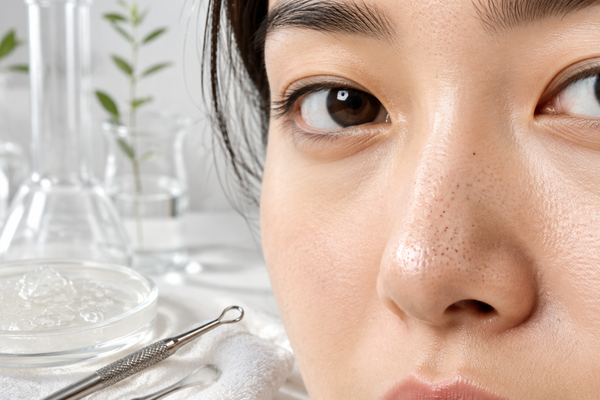
Oily skin is not automatically acne-prone, but the two conditions often overlap. Signs include shine just a few hours after cleansing, visible pores, open or closed comedones, recurring blemishes, and a grayish complexion despite the shine.
Be careful of a common misconception: the feeling of tight skin after washing is not proof of effective cleansing, but often a sign of a stressed barrier. Oily skin can be perfectly dehydrated, in which case it produces even more sebum to compensate.
The essential routine
The strategy is built around two active ingredients: salicylic acid and niacinamide. We explain them in our guide to essential men’s skincare ingredients.
1. Purifying cleanser
A gentle cleanser removes sebum, sweat, and impurities without compromising comfort. The mousse contains salicylic acid, burdock, and tea tree oil, minimizing the appearance of pores without prompting the skin to produce more sebum.

CLEANSING ACTIVE MOUSSE Purifying face cleansing mousse anti-imperfections Reduce enlarged pores Purifies the skin from impurities Improves ... Discover CLEANSING ACTIVE MOUSSE
2. Sebum-regulating serum
It combines salicylic acid, niacinamide, and Zincidone. Salicylic acid is among the most studied active ingredients for mild acne and comedonal skin; niacinamide supports the skin’s balance and the tolerability of the entire routine.

ACNEREBAL SERUM Sebum-normalizing serum and reduction of enlarged pores based on Salicylic Acid, Zincidone, Niacinamide Reduce enlar... Discover ACNEREBAL SERUM
3. Lightweight hydration
Even oily skin needs a cream, as long as it is lightweight. It contains niacinamide, Zincidone, and azeloglycine, which smooths skin texture and evens out the complexion.

ACNEREBAL CREAM Sebum-normalizing, evening and mattifying cream based on Azeloglicina®, Zincidone®, Niacinamide Reduces sebum produc... Discover ACNEREBAL CREAM
4. Sun protection
This is the step most often skipped by people with blemish-prone skin, and the most costly one to skip. Without sun protection, every inflammatory lesion is much more likely to leave a dark spot that can then take months to fade.

SPOT DEFENCE 50 SPF Anti-spot face sunscreen serum SPF 50 with encapsulated vitamin C and probiotic ferments for skin with discolorations... Discover SPOT DEFENCE 50 SPF
There is also a seasonal phenomenon worth knowing about: in summer, the sun may seem to improve acne, but the situation suddenly worsens in September. This is not a coincidence, and it is explained in the article on sun, acne, and the rebound effect. If you choose a non-comedogenic texture, sunscreen won’t feel heavy.
The most common mistakes
- Washing your face too often with harsh products: the more you strip away oil, the more the skin compensates.
- Layering too many active ingredients: alternating strong exfoliants and intensive treatments without a clear plan weakens the barrier.
- Stopping after just a few days: results on blemish-prone skin should be assessed after weeks, not after a few applications.
- Squeezing blemishes: this is the action most likely to cause permanent scarring.
If your skin is also reactive, read the advice on how to calm it after shaving. For the complete protocol for enlarged pores and dullness, see the oily-skin routine.
Frequently asked questions
Does a beard make acne worse?
Not in itself, but it changes the conditions: under the hair, the skin is less ventilated and retains more sebum and dead skin cells. The practical problem is that many people stop cleansing and treating the covered area, which is where blemishes become concentrated. The solution is not to shave: it is to apply cleanser and serum to the skin, parting the hair with your fingers and using fluid textures that don’t get caught in it.
How long does it take to see results?
The first differences in shine and comedones generally appear after four to six weeks. Dark spots left by blemishes take much longer, often two or three months, because the pigment already deposited follows the pace of cell turnover. During the first two weeks, it may seem as though nothing is changing: this is normal, and it is when most people give up.
Does diet affect acne?
The strongest evidence concerns two factors: high-glycemic-index foods and, with less consistent evidence, milk — especially skim milk. Both act by stimulating hormonal signals that increase sebaceous activity. This does not mean that diet causes acne or that eliminating a particular food will resolve it: it is one possible contributing factor, alongside genetics and hormones, not the main explanation.
Do exercise and sweat worsen blemishes?
Sweat itself does not clog pores. Problems are caused by the length of time it remains on the skin and friction from helmets, straps, or sports masks. Cleansing within an hour of exercising and not leaving wet clothing on eliminates much of the risk without giving anything up.
When should you see a dermatologist?
When blemishes are deep, painful, or nodular, when they leave raised or indented scars, or when there is no improvement after three months of consistent routine. These are cases that require treatment, and cosmetics alone are not enough: delaying care increases the risk of permanent marks.
In conclusion
Male acne is best managed by abandoning the idea of drastic measures. Proper cleansing, targeted treatment, lightweight hydration, and sun protection are the most sensible foundation.
If blemishes are deep, painful, or persistent, a dermatologist is still the right point of reference: skincare supports treatment but does not replace it.
Once your skin has regained its balance, you can move on to preventing the first signs of aging with the guide to an anti-aging routine for men.
You can also find LeLang products in partner pharmacies throughout Italy.