


[INDICE:h2]
Sensitive skin is a condition in which the skin reacts excessively to internal and external stimuli. It is not a disease and cannot be “cured,” but it can be managed very effectively with a suitable routine and carefully chosen products.
Multiple factors contribute to it, and recognizing it is the first step toward treating it correctly.
What it means to have sensitive skin
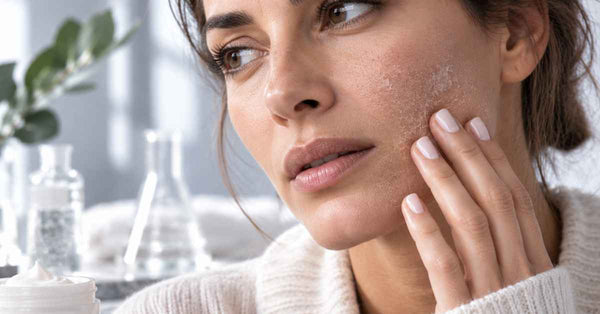
It is a condition characterized by an exaggerated response to stimuli that would not normally cause discomfort. The signs may be permanent or temporary: redness, dryness, itching, irritation, and flaking.
There are two different situations, which should be treated differently:
- Constitutionally sensitive skin, linked to genetic factors and more common in women and people with fair skin types.
- Sensitized skin: healthy skin that shows signs of sensitivity due to external factors — the environment, pollution, a cosmetic product, or an unsuitable treatment — or internal factors, such as stress, hormonal fluctuations, or weakened defenses.
How to recognize it
- Red, swollen, and itchy skin;
- Redness even without swelling;
- A tingling or burning sensation;
- Skin rashes or hives;
- Dry skin that tends to crack;
- Roughness and flaky areas.
If redness is the dominant symptom, find immediate relief in the article on what to apply immediately to reddened skin. If, instead, the redness is persistent and accompanied by visible capillaries, the conditions to learn about are erythrosis, couperose, and rosacea.
The most common causes
Symptoms vary depending on the cause. Among the conditions most commonly involved:
- Contact dermatitis, irritant or allergic, following exposure to a substance that damages the protective barrier.
- Eczema or atopic dermatitis, a chronic condition that periodically flares up.
- Rosacea, chronic inflammation causing marked reactivity.
Having dry skin also predisposes you to sensitivity: fewer lipids mean less protection from external irritants.
Other contributing factors include water that is too hot, harsh detergents and disinfectants, excessive exfoliation, excess alcohol and caffeine, hormonal changes such as menopause, medications, UV damage, pollution, harsh weather, lack of sleep, smoking, and sleeping without removing makeup. The complete analysis is available in the article on the causes of increased skin sensitivity.
Identifying the exact cause is often difficult, and in some cases skin sensitivity may be a sign of a condition that should be assessed. If symptoms persist, worsen, or are accompanied by visible lesions, the dermatologist is the right point of reference: a cosmetic product can improve comfort and tolerance, but it cannot replace a diagnosis.
How to treat sensitive skin
Sensitive skin is skin with weakened defenses. The goal is not to add active ingredients, but to strengthen the skin barrier and reduce triggers.
Cleansing
Lukewarm water, never hot, and a cleanser rich in soothing agents that respects the skin's balance. Cleansing Detox Mousse removes makeup and impurities while soothing thanks to mallow and calendula extracts, with the galactomannans from Caesalpinia spinosa (INCI: Hydrolyzed Caesalpinia Spinosa Gum), which retain water in the stratum corneum and, according to the manufacturer's in vitro tests, help maintain the balance of the resident bacterial flora, namely the skin microbiota.

CLEANSING DETOX MOUSSE Detoxifying facial cleansing mousse Remove makeup and any trace of impurities Respect the skin's balance Brightens a... Discover CLEANSING DETOX MOUSSE
If you prefer affinity cleansing, the oil-gel is even gentler and requires no rubbing.

CLEANSING GENTLE OIL Rich cleansing and makeup removing gel oil for a deep cleansing, protects the hydrolipidic barrier Protects the skin... Discover CLEANSING GENTLE OIL
Redness treatment
For reactive skin with persistent redness and fragile capillaries, Couper Relief combines thermal water, ceramides, and extracts of Centella asiatica, turmeric, and helichrysum. The active ingredient that gives the formula its name is Acetyl Tetrapeptide-40, a peptide that does more than soothe: it acts on the inflammatory signal that keeps the skin on alert.

COUPER RELIEF Anti-redness and couperose face serum for sensitive skin With peptides tested for couperose, MicoRepair complex, ther... Discover COUPER RELIEF
Antioxidant protection
Pollution and oxidative stress worsen reactivity. Lycoglow Serum contains lycopene and mullein, with antioxidant and brightening action.

LYCOGLOW SERUM Illuminating face serum and anti-pollution Illumina Improves hydration Helps to reduce skin flaking Protects from UV... Discover LYCOGLOW SERUM
Hydration
The ideal cream for sensitive skin is nourishing but non-occlusive. Nutralight Sensitive is specifically formulated for reactive skin, with bisabolol, aloe, niacinamide, and a mallow, calendula, and marshmallow complex.

NUTRALIGHT SENSITIVE Soothing and repairing face cream with thermal water from the Piedmont Alps – ideal for sensitive and reactive skin ... Discover NUTRALIGHT SENSITIVE
Sun protection
This applies to all skin types, but even more so to sensitive skin: UV rays weaken the skin barrier and increase reactivity. Broad-spectrum protection is needed all year round.

SPOT DEFENCE 50 SPF Anti-spot face sunscreen serum SPF 50 with encapsulated vitamin C and probiotic ferments for skin with discolorations... Discover SPOT DEFENCE 50 SPF
The advice that matters more than any product: simplify. With sensitive skin, use fewer steps and introduce no new active ingredients while the skin is struggling. Keep the same routine for at least four to six weeks before evaluating it.
Redness of the nose and cheeks
It is the area that most often leads people to seek a solution because it is the most visible. The nose and cheekbones have a more superficial capillary network and react sooner to cold, temperature changes, alcohol, and very hot or spicy foods.
The first step is not to cover it up but to reduce the frequency of episodes: protect your face from the wind, avoid abrupt transitions from the cold outdoors to heated indoors, and do not use hot water on your face. For existing redness, active ingredients that support microcirculation and soothe the skin work well when applied consistently for several weeks. A spray of thermal water kept in your bag provides immediate relief during flushing episodes.
Frequently asked questions
Sensitive skin or an allergy: how can you tell the difference?
Sensitive skin reacts excessively but proportionately to the stimulus, and discomfort appears quickly and disappears just as quickly when the cause is removed. An allergic reaction involves the immune system, may appear hours later, tends to worsen with each new exposure, and often extends beyond the contact area. In case of swelling, blisters, or symptoms that recur with the same product, consult a dermatologist, who may recommend a patch test.
Which face creams should be used during pregnancy on sensitive skin?
During pregnancy, the skin often becomes more reactive due to hormonal changes and increased vascularization. The same general approach used for sensitive skin applies, in a simplified form: a gentle cleanser, a soothing cream with few ingredients, and daily sun protection. Hyaluronic acid, glycerin, niacinamide, bisabolol, panthenol, oat, and plant butters remain well tolerated.
Which cosmetics should be avoided during pregnancy?
Retinol and all retinoids, professional peels, and high-concentration exfoliating acids are put on hold, and light or fragrance-free products are preferred, because tolerance is lower during this phase. It is good practice to share any product you use regularly with your gynecologist or dermatologist.
Can sensitive skin become normal?
If the skin is sensitized, yes: by removing the cause and rebuilding the barrier, tolerance returns within a few weeks. If the sensitivity is constitutional, it remains a characteristic of the skin, but with a consistent routine, symptoms become occasional rather than daily.
Can exfoliants be used on sensitive skin?
Yes, but carefully: gentle molecules such as PHA or mandelic acid, once a week, never during active irritation and never together with other new active ingredients. Granular scrubs and mechanical brushes, however, should be avoided: the micro-trauma fuels exactly what you are trying to reduce.
Why does sensitive skin get worse during seasonal changes?
Because the skin barrier has to readjust to different humidity, temperatures, and wind, it temporarily becomes less efficient. This is the time to simplify your routine and strengthen its lipid component, without introducing anything new: we discuss this in the article on sensitive skin during seasonal changes.
If you need advice
Sensitive skin responds well to a protocol built around its specific needs. You can contact your partner pharmacy or speak to us directly.
15-minute free consultation with the founder
If your skin is reacting and you no longer know which product to start with, we can look at it together: Elisa Avalle, founder of LeLang, will help you build an essential routine, one step at a time.