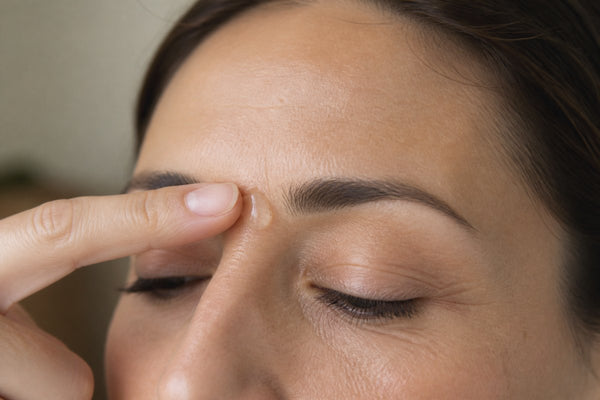


They appear on the fingers and toes, heels, and sometimes ears: red or purplish swollen patches that burn and itch, especially when moving from cold to warmth.
They are not frostbite or a permanent circulatory problem. They are an inflammatory reaction that follows prolonged vasoconstriction: the small blood vessels close to protect core temperature, and when warmth returns, the microcirculation responds erratically.
The trigger is not extreme cold but cold, damp weather, typical of transitional seasons and maritime climates. They appear more often in November and March than on the coldest days of the year.
Article written by Elisa Avalle, founder of LeLang Skin Care and dermocosmetics specialist. Cover image generated with the support of artificial intelligence.
[INDICE:h2]
Who is most affected
There is an individual predisposition linked to the reactivity of the microcirculation. People whose extremities are usually cold are more susceptible, as are those with poor peripheral circulation, those who spend many hours outdoors in damp conditions, and those who wear tight footwear that further restricts blood flow.
Moisture inside footwear matters too: a sweaty foot in a poorly ventilated shoe stays wet, and damp fabric dissipates heat much faster than dry fabric.
What to do and what not to do
The main rule is counterintuitive and worth putting first.
- Don't warm up abruptly. Avoid very hot water, hot-water bottles, or direct heat sources on cold areas. Rapid warming is precisely the stage when the inflammatory reaction worsens. Warm up gradually at room temperature.
- Keep your feet warm and dry, which is the real prevention. Wear socks made from natural fibers, change them if they get damp, and choose footwear that doesn't squeeze.
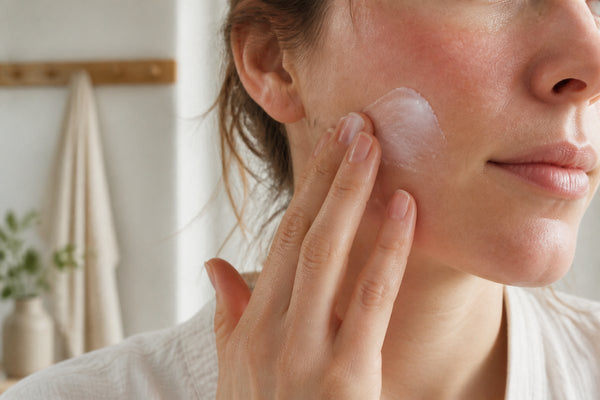
- Protect the skin before exposure, with emollient formulations that limit moisture loss and keep the surface intact.
- Don't scratch. The itching is the most bothersome part, but the skin is fragile at this stage and easily damaged.
- Stimulate circulation gradually: exercise regularly and alternate water at different temperatures, always avoiding extremes.
Active ingredients used in protective creams
The category of products for areas sensitive to cold and damp is fairly well defined.
Tormentil (Potentilla erecta) is the extract most traditionally associated with this use, thanks to its astringent and decongestant properties. Other ingredients that act on peripheral microcirculation include aescin and horse chestnut, and bioflavonoids such as rutin, which have been documented to support capillary resistance.
The emollient base matters just as much as the active ingredient. Intact, supple skin copes with temperature fluctuations much better than dry, chapped skin, and ingredients that are nothing exotic help with this: plant butters, ceramides, allantoin, panthenol.
When to see a doctor: lesions that ulcerate, severe pain, patches that do not go away with the change of season, episodes that occur even outside the cold months, or episodes accompanied by pronounced changes in finger color in the cold. These situations need clinical evaluation, and a cosmetic product has no role in treating them. The same applies if you have diabetes or known circulatory problems.
Prevention starts early
People who have had chilblains once tend to get them again. So it's best not to wait for them to appear: keep the skin on your extremities hydrated throughout the cold season, dry it carefully, avoid compression, and treat thickened areas that affect your footing and local circulation.
The same principle applies to chapped hands and much of winter skincare: what helps is taking action before the problem appears.
Free 15-minute consultation with the founder
To prepare your skin for the cold season, before the problem occurs.
On the site: Body Skincare · The skin barrier · LeLang partner pharmacies
Frequently asked questions
What are chilblains?
They are reddish or purplish, swollen patches that burn and itch, especially when moving from cold to warm conditions. They appear on the fingers and toes, heels, and sometimes ears. They are not a cold burn or a permanent circulatory problem, but an inflammatory reaction that follows prolonged vasoconstriction: when warmth returns, the microcirculation responds irregularly.
Why do chilblains occur more often in November and March?
Because they are triggered not by extreme cold but by damp cold, which is typical of transitional seasons and maritime climates. Humidity inside shoes matters too: a sweaty foot in poorly ventilated footwear stays wet, and damp fabric loses heat much faster than dry fabric. People whose extremities are usually cold and those who spend many hours outdoors are more susceptible.
What should you do when chilblains appear?
The main rule is not to warm up abruptly: avoid very hot water, hot water bottles, or direct heat sources, as rapid warming worsens the inflammatory reaction. Warm up gradually at room temperature. It's also best to keep your feet warm and dry, avoid scratching the skin, which is fragile at this stage, and exercise regularly.
How can chilblains be prevented?
It's best not to wait for them to appear: keep the skin on your hands and feet moisturized throughout the cold season, dry them thoroughly, choose natural-fiber socks and change them if they get damp, and wear shoes that don't squeeze. Before going out in the cold, emollient formulas containing tormentil, escin, rutin, ceramides, allantoin, or panthenol can help, because intact skin is better able to withstand temperature changes.
When should chilblains be seen by a doctor?
When lesions ulcerate, the pain is severe, the patches do not fade with the change of season, or episodes also occur outside the cold months. The same applies if the fingers change color markedly in the cold and in the presence of diabetes or known circulatory disorders. These situations need clinical assessment; cosmetics can help protect the skin and keep it comfortable.
Sources for this article
- Prakash S., Weisman M.H. (2009). "Idiopathic chilblains". The American Journal of Medicine, vol. 122, no. 12, pp. 1152-1155.
- Simon T.D., Soep J.B., Hollister J.R. (2005). "Pernio in pediatrics". Pediatrics, vol. 116, no. 3, pp. e472-e475.
Elisa Avalle is the founder of LeLang Skin Care, specializing in dermocosmetics at the University of Barcelona.