


[INDICE:h2]
Often, due to hormonal fluctuations, internal factors, or sudden temperature changes, facial skin begins to feel tight and looks dull and irritated. The terms dry skin and dehydrated skin are used as synonyms, but they indicate two different things: the former is a skin type low in lipids, while the latter is a temporary condition involving a lack of water in the tissues.
Recognizing the difference is the first step to avoiding buying the wrong product. Let’s see how to tell them apart and how to establish the right routine.
The difference between dry and dehydrated skin
What is dry skin?
It is a skin type, like oily, normal, or combination skin. The skin produces little lipid and sebum, so the protective film is poorer and struggles to retain moisture.
It is a constitutional condition that can worsen during certain periods — cold weather, wind, harsh cleansers — and that cannot be resolved with just any moisturizer. A lack of lipids in the stratum corneum increases transepidermal water loss (TEWL) and makes the skin thinner and more vulnerable to external stimuli.
It can be identified by:
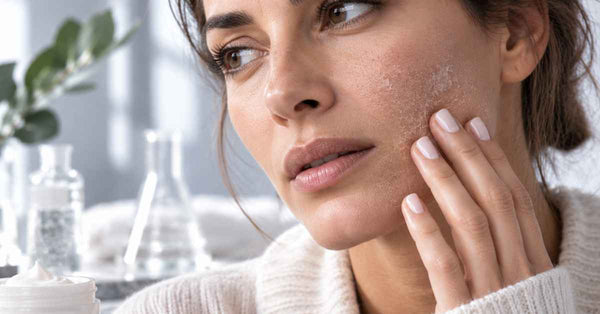
- Visible flaking, peeling skin, and a rough texture to the touch;
- A feeling of tightness, especially after cleansing;
- Itching or burning, sometimes with localized redness;
- Reduced elasticity and a dull complexion.
When dryness is pronounced, micro-cracks may appear, and the skin becomes easily irritated by contact with cold, wind, or harsh products.
Dryness can also appear only in certain areas: the most common is around the nose, where friction and temperature fluctuations put a small, already delicate area to the test.
What is dehydrated skin?
It is a temporary condition caused by a lack of water in the tissues, and it can appear on any skin type, including oily or combination skin. It is not dryness in the strict sense, but skin that is temporarily dehydrated due to stress, climate, overly harsh cleansing products, or unbalanced routines.
Precisely because it concerns water rather than lipids, it is reversible: with a targeted skincare routine, the situation improves.
The signs are similar — tightness and roughness — but with fine dehydration lines, especially around the eyes, and a grayer complexion.
The case that causes the most confusion: even oily skin can be dehydrated. It appears shiny in the T-zone, but feels tight after cleansing and shows fine lines and areas of flaking. This is why treating it as "oily and nothing else," with degreasing products, makes the condition worse. We discuss this in the guide to an oily-skin routine.
| Dry skin | Dehydrated skin | |
|---|---|---|
| What is it | A skin type | A temporary condition |
| What is lacking | Lipids | Water |
| Distinctive sign | Flaking, dry patches | Fine lines, grayish complexion |
| Pores and shine | Pores barely visible, no shine | Visible pores too, shiny T-zone |
| Reversible | No, it can be managed | Yes |
| What is needed | Oils, butters, ceramides | Humectants: hyaluronic acid, glycerin, urea |
How to tell whether your skin is dry or dehydrated: two tests
Two at-home tests, performed one after the other, provide a fairly clear answer without the need for any tools.
- The ten-minute test. Cleanse your face, pat it dry with a clean towel, and apply nothing for ten minutes. If flaking and widespread roughness appear, dryness predominates; if the skin feels tight but remains smooth to the touch and shows fine lines, dehydration predominates.
- The pinch test. Gently pinch a small fold of skin on your cheekbone and release it. If it immediately returns to position, its hydration level is good; if it remains marked for a few moments and fine lines stay visible, the skin is lacking water.
The third clue appears when you look in the mirror in the middle of the afternoon: dry skin remains dull and lacks radiance, while dehydrated skin may have a shiny T-zone and visible pores despite feeling tight. This is the typical hallmark of dehydrated oily skin.
In most cases during winter, the two conditions coexist: skin that is constitutionally dry and also loses water. The routine does not change in nature; the order changes: first replenish water with humectants, then seal it in with a richer texture. Skipping the second step is the mistake that makes the first one useless.
The natural moisturizing factor: what the skin does on its own
Before adding anything from the outside, it is worth knowing that the stratum corneum already has its own hydration system, the Natural Moisturizing Factor. It is a collection of hygroscopic substances produced by the breakdown of filaggrin: free amino acids, pyrrolidone carboxylic acid, lactates, and urea.
It is worth knowing this for two very practical reasons. The first is that it explains why certain ingredients work better than others: urea and amino acids are already part of that system; they do not merely imitate it. The second is that the NMF is water-soluble, so harsh cleansing removes it along with dirt.
That's why, before buying a new moisturizer, the right question is a different one: what is your cleanser like? If your skin feels tight after washing, the problem starts earlier in the routine, and no cream can fully compensate for it.
The causes
Dry skin is often a genetic condition: some people naturally produce fewer lipids. Over time, skin aging, hormonal changes such as menopause, and conditions such as atopic dermatitis or psoriasis can further weaken the skin barrier.
A clarification regarding the two conditions just mentioned: atopic dermatitis and psoriasis are dermatological conditions, not simple dryness. A well-chosen emollient routine improves comfort and tolerance and is often recommended as supportive care, but diagnosis and treatment are the dermatologist's responsibility. If flaking persists, has clearly defined edges, or is accompanied by intense itching, that is the right course of action.
Dehydrated skin, on the other hand, results from a mix of stress, lifestyle, and an unbalanced routine: insufficient sleep, a diet low in water and healthy fats, smoking, and alcohol. Frequent use of overly stripping cleansers or excessive exfoliation also removes beneficial lipids and damages the hydrolipidic film.
Prolonged stress deserves a chapter of its own: it affects the synthesis of barrier lipids and intensifies the feeling of tightness, even in people who have never had dry skin.
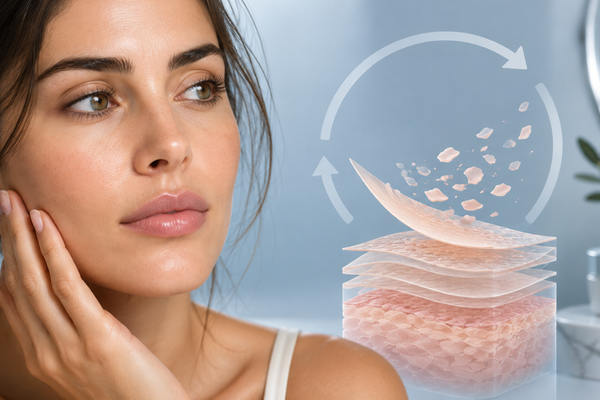
The barrier works like a brick wall—the cells—and mortar, the lipids. When the structure weakens, the skin becomes more permeable and water evaporates more easily. To understand how this mechanism fits into the skin's overall architecture, you'll find everything in the guide on how skin is made and how it works. Air pollution also contributes: particles oxidize the barrier's lipids and proteins, making it less compact.
Mistakes that make the situation worse
Before adding products, it is best to eliminate the habits that fuel the problem. There are four, and they are all counterintuitive because they stem from the desire to do more.
- Cleansing too often or for too long. Every wash removes some of the protective sebum. On dry skin, cleansing twice a day is the maximum, and in the morning water is often enough.
- Using hot water. It dissolves surface lipids and leaves the skin worse off than it found it. Lukewarm, always.
- Exfoliating to remove flaky skin. This is the most common mistake: flaking is a symptom of a compromised barrier, and scrubbing it away compromises it further. Rebuild it first, then exfoliate if necessary.
- Changing cream every week. A damaged barrier takes two or three weeks to rebuild. Anyone who changes products sooner does not give any of them enough time to work.
There is a fifth mistake that almost no one associates with the face, and it concerns the body: the first two points on this list apply in exactly the same way in the shower, where the area involved is much larger and the action is daily. Anyone who takes care of facial cleansing and then washes their body with boiling-hot water and a harsh cleanser is working against themselves. For how to choose—and what really differs between one product and another—see the article on shower gel, bubble bath, and body wash.
The environment matters more than it seems
There is one factor that does not concern the skin but affects it every day in winter: dry air in heated rooms. When air is heated, its relative humidity drops, and the skin loses water through simple evaporation.
The data are concrete. In a clinical study conducted in Korea, six hours in a heated environment with relative humidity below 20% were enough to cause a statistically significant increase in roughness, pores, redness, and visible facial wrinkles, as well as transepidermal water loss on the forearm. Six hours, on healthy skin. It is also known that sharp drops in ambient humidity disrupt barrier homeostasis, and that room humidity affects the formation of fine lines on the face.
The practical consequence: a humidifier in the bedroom addresses the cause, while cream addresses the effect. It would be wrong to say that it replaces cosmetics—the Korean study found that the ceramide cream improved elasticity, pores, and skin texture compared with the untreated side—but addressing the skin alone in a room with very low humidity means chasing the problem. The two go hand in hand.
Ingredients to look for in the INCI
The distinction between the two conditions becomes concrete right here, when looking at the ingredient list. Every moisturizing ingredient does one of three different things, and none of the three is enough on its own: that is why well-formulated products combine at least two of them.
| Family | What it does | INCI examples |
|---|---|---|
| Humectants | They attract and bind water in the stratum corneum | Glycerin, Sodium Hyaluronate, Urea, Betaine, Panthenol |
| Emollients | They fill the spaces between cells and rebuild lipids | Plant oils, Squalane, Ceramide NP, Cholesterol |
| Occlusives | They form a film that slows evaporation | Butters, waxes, Dimethicone, Petrolatum |
Humectants — they address dehydration:
- Hyaluronic acid, which is more effective when different molecular weights are present in the same formula;
- Glycerin, the most studied and most stable humectant over time;
- Urea, which is part of the skin’s natural moisturizing factor and, at low concentrations, also softens rough areas.
One detail that almost no one explains: in a very dry environment, a humectant may draw water from the deeper layers of the skin rather than from the air. With an intact barrier, the effect is negligible; with an already damaged barrier, and without anything on top to seal it in, it can worsen the feeling of tight skin. This is the technical reason why a hyaluronic acid serum used on its own in winter can sometimes disappoint.
Emollients and occlusives — they address dryness:
- Shea butter and plant oils rich in essential fatty acids;
- Squalane and ceramides, which rebuild the “mortar” between the cells of the stratum corneum;
- Vitamin E, which protects the newly replenished lipids from oxidation.
The routine for dry and dehydrated skin
Cleansing
The goal is to avoid the “tight skin” feeling. An oil-based cleanser is better: it removes makeup and dirt through affinity without stripping the skin’s hydrolipidic film. Rinse with lukewarm water, never hot.

CLEANSING GENTLE OIL Rich cleansing and makeup removing gel oil for a deep cleansing, protects the hydrolipidic barrier Protects the skin... Discover CLEANSING GENTLE OIL
Targeted serums and treatments
In the morning, Lycoglow Serum brightens and provides an antioxidant shield against environmental aggressors, improving hydration and reducing flaking thanks to mullein and lycopene.

LYCOGLOW SERUM Illuminating face serum and anti-pollution Illumina Improves hydration Helps to reduce skin flaking Protects from UV... Discover LYCOGLOW SERUM
In the evening, if the skin is particularly stressed, the night serum based on plant oils supports the lipid component during overnight renewal.

5 COMPLEX NIGHT SERUM Elasticizing night face oil With precious oils with high nourishing power ... Discover 5 COMPLEX NIGHT SERUM
Once or twice a week, or as an SOS treatment when the skin looks dull and rough, the mask provides a concentrated dose of active ingredients.

SKINAGE ADVANCE Hydrating and elasticizing anti-age face mask based on Pink Clay, Ceramides, Q10, Tripeptide-5EFFECTS: Stimulates c... Discover SKINAGE ADVANCE
During the day, when you feel your skin starting to feel tight, a spray of thermal water supplies minerals and provides immediate relief.

THERMAL WATER PRO AGE Protects, repairs, and strengthens the skin barrier Hydrates and supports the skin barrier Helps counteract oxidat... Discover THERMAL WATER PRO AGE
Face cream
This is the step that completes the routine, sealing in water and active ingredients while adjusting lipid intake. This is where the initial distinction becomes practical.
If the skin is dehydrated, the goal is to retain water: Hyaluronic Advance works with hyaluronic acid in different molecular weights.

HYALURONIC ADVANCE Anti-Aging Elasticizing Face Cream - Ultra Fill Filler like action Stimulates the production of Endogenous Hyaluroni... Discover HYALURONIC ADVANCE
If the skin is dry and also needs support for tone and elasticity, Alba provides richer nourishment, making it suitable in winter or in very dry environments.

SUNRISE Firming, toning face cream collagen stimulator. Rassoda in two weeks (instrumental effectiveness test) Improves even... Discover SUNRISE
If dryness is accompanied by sensitivity, it is better to choose a soothing formula.

NUTRALIGHT SENSITIVE Soothing and repairing face cream with thermal water from the Piedmont Alps – ideal for sensitive and reactive skin ... Discover NUTRALIGHT SENSITIVE
You can find the full range in the LeLang selection of moisturizing facial treatments, developed precisely according to this approach: humectants and lipids working together, rather than a single key active ingredient repeated in every formula.
If you would prefer to have your skin assessed before choosing between these three approaches, you can find LeLang products and expert advice at partner pharmacies throughout Italy.
Frequently asked questions
How can you tell whether skin is dry or dehydrated?
With the two tests described above: ten minutes without products after cleansing, and the pinch test on the cheekbone. If widespread flaking and roughness appear, dryness is the predominant factor; if the skin feels tight and shows fine lines but remains smooth to the touch, it is dehydration. The two can coexist, and this is actually the most common situation in winter.
Can oily skin be dehydrated?
Yes, and it’s a very common combination. The skin produces an abundance of sebum but lacks water: it looks shiny while also feeling tight. Treating it only as oily, with degreasing cleansers and mattifying products, worsens dehydration and prompts the glands to produce even more sebum.
In what order should the products be applied?
From the lightest to the richest, and the rule that resolves most cases is this: first the water, then what retains it. Apply a humectant to still slightly damp skin, then an emollient or an occlusive on top. The reverse order seals skin that has not yet received anything to retain.
Does drinking more water hydrate the skin?
It helps, but it isn’t enough and it’s not the main factor. Skin hydration depends above all on the barrier’s ability to retain water, not on how much you drink: if the barrier is compromised, water will evaporate anyway. Drinking enough is a good habit; rebuilding the barrier is the real work.
Does the air in my home really affect my skin?
Yes, and quickly. In a heated environment with very low relative humidity, just a few hours are enough for measurable worsening of roughness, redness, and transepidermal water loss to appear, even on healthy skin. A humidifier in the bedroom addresses the cause; the cream is still necessary because it works on the barrier.
How long does it take dehydrated skin to improve?
Comfort returns within a few days, but the barrier rebuilds over two or three weeks of consistent routine. Dehydration, being a condition rather than a skin type, can be resolved; constitutional dryness is managed over time without disappearing.
Do I need ceramides or hyaluronic acid?
It depends on what’s missing. Hyaluronic acid, glycerin, and urea are humectants: they draw in and retain water, so they’re useful for dehydration. Ceramides, butters, and oils replenish lipids, so they’re useful for dryness. On dry skin, hyaluronic acid alone can even worsen the sensation, because it draws in water that then evaporates without a film to hold it in: it should always be sealed in with a cream on top.
Can you use a moisturizer together with acids or retinol?
Yes, and it’s actually advisable: those active ingredients put the barrier to the test, and a good moisturizer is what makes using them sustainable. The rule is to apply it after, not before, so as not to reduce the active ingredient’s absorption.
Why has my moisturizer stopped working?
In most cases, it’s not that the cream has stopped working: the context has changed. The season, the heating being turned on, a new cleanser, an active ingredient introduced recently, or simply the passing of the years. Before replacing it, it’s worth looking at what has changed around you.
Does dry skin age faster?
Dryness itself does not accelerate the biological processes of aging, but it makes wrinkles more visible: skin lacking water reflects light less effectively, making fine lines appear more pronounced. Restoring the skin barrier and hydration improves the appearance of skin texture in a short time, which is why well-hydrated skin looks smoother.
In conclusion
Distinguishing between dry and dehydrated skin is the first step toward an effective routine. Dryness requires a targeted supply of lipids; dehydration calls for molecules capable of retaining water in the tissues. And when the two conditions coexist — the most common case in winter — you don't need to choose: you need to follow the right order.
Consistency does the rest, along with the habit of adapting your routine to the season: we discuss it in the article on how to prepare your skin for winter.
Sources for this article
01 Park E.H., Jo D.J., Jeon H.W., Na S.J., Effects of winter indoor environment on the skin: Unveiling skin condition changes in Korea, Skin Research and Technology, 2023; 29(6): e13397.
02 Sato J., Denda M., Chang S., Elias P.M., Feingold K.R., Abrupt decreases in environmental humidity induce abnormalities in permeability barrier homeostasis, Journal of Investigative Dermatology, 2002; 119(4): 900-904.
03 Tsukahara K., Hotta M., Fujimura T., Haketa K., Kitahara T., Effect of room humidity on the formation of fine wrinkles in the facial skin of Japanese, Skin Research and Technology, 2007; 13(2): 184-188.
04 Rawlings A.V., Harding C.R., Moisturization and skin barrier function, Dermatologic Therapy, 2004; 17(Suppl 1): 43-48.
05 Verdier-Sévrain S., Bônté F., Skin hydration: a review on its molecular mechanisms, Journal of Cosmetic Dermatology, 2007; 6(2): 75-82.
15-minute free consultation with the founder
Can't tell whether your skin is dry, dehydrated, or both? Book a free virtual skincare consultation with Elisa Avalle, founder of LeLang: we'll assess it together and build your routine in the right order.
On the website: skin barrier · urea and biomimetic hydration · exfoliating the skin · facial moisturizing treatments