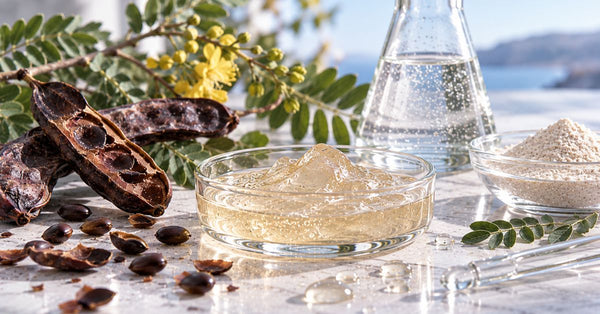


Rose water, orange blossom water, linden flower water, witch hazel water. On labels, they appear as Rosa Damascena Flower Water or Tilia Cordata Flower Water, and are seen as the gentle, natural version of a toner. They are something specific: the aqueous by-product of essential oil distillation. Understanding where they come from explains both what they can do and what they can’t.
In short
- A hydrosol is the water that separates from the essential oil at the end of steam distillation.
- It contains water-soluble aromatic molecules in very low concentrations: it’s gentle by nature.
- It’s not a potent active ingredient and doesn’t replace a serum: it supports comfort and sensory appeal.
- It still contains fragrant components, so “natural” doesn’t automatically mean suitable for people with allergies.
Article written by Elisa Avalle, founder of LeLang Skin Care and dermocosmetics specialist. Cover image generated with the support of artificial intelligence.
[INDICE:h2]
How a hydrosol is made
In steam distillation, steam passes through the plant and carries the volatile compounds with it. When it condenses, it separates into two phases: the essential oil on top and the water below. That water isn’t pure: it has dissolved water-soluble aromatic molecules and a small amount of dispersed essential oil.
For a long time, it was considered a waste product. Today, it’s an ingredient in its own right, used as the water phase in toners, masks and creams instead of demineralized water.
Hydrosol, floral water, thermal spring water: three different things
| What it is | Where it comes from | What it contains |
|---|---|---|
| Hydrosol or floral water | Distillation of flowers, leaves or wood | Water-soluble aromatic molecules, in trace amounts |
| Thermal water | Spring water, not distilled | Mineral salts and trace elements |
| Aqueous extract | Plant maceration in water | Non-volatile, water-soluble compounds, in higher concentrations |
They’re often confused, but they don’t do the same thing. For a comparison with thermal spring water, see the article on thermal spring water, which works through its mineral content, not its aroma.
What they really do for the skin
The honest answer is: not much, but what they do, they do well. The concentrations involved are very low, so you can’t expect the effects of an active ingredient at a known percentage. What a hydrosol does is provide an immediate feeling of freshness and comfort, act as the water phase in a formula and, in some cases, have a mild astringent or soothing effect.
Some hydrosols are traditionally associated with a specific use: witch hazel for skin with visible capillaries, linden and chamomile for reactive skin, Damask rose for dry, dull skin. These are established uses with limited experimental support: it’s worth knowing this and choosing them for what they offer.
The advice to “replace your toner with rose water” makes sense only if you use toner to freshen up. If you use it to rebalance your skin’s pH after cleansing or to deliver active ingredients, hydrosol won’t do that job.
Natural doesn’t mean risk-free
A hydrosol contains the same families of molecules as the corresponding essential oil, just in much lower concentrations. People who are sensitized to a fragrance allergen, such as linalool or geraniol, may also react to floral water. The guidelines for using aromatic extracts are in the essential oils guide.
There is also a technical point concerning safety: because it is water containing organic matter, a hydrosol provides a favorable environment for microorganisms. A product containing it needs a preservative system, and homemade preparations kept in the bathroom for months are a bad idea.
How to read it on the label
- If the hydrosol is the main water phase, it appears first on the list, in place of Aqua.
- If it appears after many other ingredients, it is present in a low percentage and is mainly there for marketing purposes.
- The term Flower Water indicates distillation; Flower Extract indicates an extract, which is made using a different process.
How we use them
In the purifying green clay mask, the water phase is made with organic linden flower water, along with sage and mint extracts. This makes the mask more comfortable to wear on combination or blemish-prone skin, which clay alone would tend to leave feeling tight.

SKINPURE REBALANCE Purifying clay face mask for oily and blemish-prone skin With Potassium Azeloyl Diglycinate, Zinc PCA, purifying clay... Discover SKINPURE REBALANCE
Frequently asked questions
What is a hydrosol?
A hydrosol is the water that separates from the essential oil at the end of steam distillation. Steam passes through the plant, carrying volatile compounds with it, and when it condenses, it separates into two phases. The remaining water contains water-soluble aromatic molecules and a small amount of essential oil dispersed in it. Today, it is used as the water phase in toners, masks, and creams.
Are floral water and thermal spring water the same thing?
No, they are different ingredients. Floral water is a hydrosol: it comes from distilling flowers, leaves, or wood and contains trace aromatic molecules. Thermal spring water comes from a spring, is not distilled, and contains mineral salts and trace elements. Aqueous extract, on the other hand, is made by macerating the plant in water and contains more concentrated, non-volatile compounds. Each has a different effect on the skin.
What is rose water used for on the face?
Like other hydrosols, it provides an immediate feeling of freshness and comfort and, in some cases, a mild astringent or soothing effect. Damask rose is traditionally associated with dry and dull skin, linden and chamomile with reactive skin, and witch hazel with skin showing visible capillaries. These are established uses with limited experimental support, and they should be chosen for the comfort they provide.
Can a hydrosol replace toner?
It depends on what you want from a toner. If you need it to refresh your skin after cleansing, a hydrosol does the job well. If, on the other hand, you need the toner to rebalance pH or deliver specific active ingredients, a hydrosol is no substitute, because its concentrations are very low. For results on dark spots, wrinkles, or blemishes, look for active ingredients in other products in your routine.
Are hydrosols suitable for people sensitive to fragrances?
Not always. A hydrosol contains the same families of molecules as the corresponding essential oil, only much more diluted, so anyone sensitized to a fragrance allergen such as linalool or geraniol may also react to a floral water. Also, since a hydrosol is water with organic matter, it needs a preservative system: it's best to avoid homemade preparations kept in the bathroom for a long time.
The next step
If you're looking for a refreshing step, a hydrosol is perfect. If you're looking for results on dark spots, wrinkles, or blemishes, the active ingredient is elsewhere. At LeLang partner pharmacies and para-pharmacies, you can find out which one you really need.
Not sure whether you need a toner or a hydrosol?
Book a free virtual consultation: we start with your skin, not the trending product.
Sources for this article
- Regulation (EC) No 1223/2009 on cosmetic products: INCI nomenclature and the requirement to list fragrance allergens on the label above the specified thresholds.
- ISO 9235, natural aromatic raw materials: definitions of steam distillation and the products derived from it.
- ISO 11930, evaluation of antimicrobial protection: the reason why a plant-based aqueous phase requires a preservative system.
- Literature on plant extracts in cosmetics: the traditional use of hydrosols is widely documented, while controlled clinical studies on individual hydrosols are scarce.
Where to go next: Thermal water · Damask rose water · Plant oils and butters
Discover the products: Combination skin · Sensitive skin