


[INDICE:h2]
In recent years, more and more people have reported skin discomfort in response to common stimuli: redness, tingling, burning, or the feeling that the skin is "tight." But what makes the skin suddenly so reactive? Understanding the causes of increased skin sensitivity is the first step toward caring for it properly.
Studies conducted in Europe indicate that a very large proportion of the adult population — predominantly women, but with significant percentages among men as well — report having sensitive skin. It is a growing phenomenon linked to environmental, cosmetic, psychological, and genetic factors.
Skin barrier dysfunction
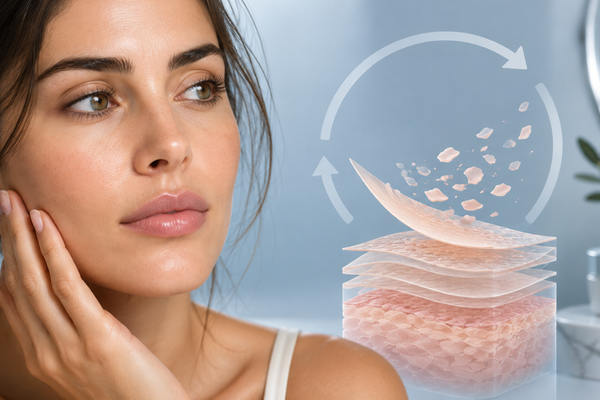
The skin barrier is the first line of defense: a system made up of lipids, keratinocytes, and proteins that protects against external agents and regulates water loss. When damaged, the skin becomes more permeable and vulnerable to irritants.
Washing too frequently with harsh cleansers, sudden climate changes, or dermatological conditions such as atopic dermatitis can compromise its integrity. In people with atopic skin, barrier dysfunction is considered the central mechanism underlying skin sensitivity.
Environment and climate
The environment we live in has a significant impact. Low temperatures, wind, fluctuating humidity, sunlight, and air pollution are all factors that can destabilize the skin's balance.
Pollution, in particular, has been associated with an increase in pro-inflammatory particles on the skin's surface: chronic exposure to fine particulate matter (PM2.5) promotes irritation and redness, altering the hydrolipidic film and microbiota.
Stress: an invisible but real cause
Psychophysical stress disrupts the hormonal and neurocutaneous balance, contributing to hypersensitivity. Cortisol compromises the lipid barrier and reduces local immune defenses, facilitating inflammatory reactions. Research has documented a higher incidence of skin symptoms — redness, tingling, flaking — in people experiencing prolonged periods of anxiety.
This is the field of neurocosmetics, which specifically studies the dialogue between the nervous system and the skin.
Hormonal factors
Fluctuations related to the menstrual cycle, pregnancy, menopause, or endocrine disorders affect the skin's response. The decrease in estrogen during menopause, for example, reduces collagen and lipid production, making the skin thinner and more prone to dehydration: a very high proportion of women develop signs of skin sensitivity during the first few years after menopause.
Genetics and personal predisposition
People with a fair phototype or a family history of atopic dermatitis, allergies, or rosacea are more likely to develop skin reactivity. Genetic analyses have identified mutations in the FLG gene (filaggrin) as predisposing factors because they directly affect the structure of the epidermal barrier.
Unsuitable cosmetics
Some ingredients—denatured alcohol, fragrances, and certain preservatives—are known sensitizers. A significant proportion of people with sensitive skin report having reacted negatively to a product used in their daily routine.
Layering too many potent actives (exfoliating acids, retinoids, vitamins in unstable forms) can also cause pH imbalance and inflammation. For guidance on consciously selecting ingredients, see the cosmetic ingredients guide.
Pre-existing skin conditions
Some chronic conditions make the skin more vulnerable. Rosacea is associated with a lower sensory threshold; psoriasis and seborrheic dermatitis alter both the skin structure and the microbiota, increasing reactivity. To distinguish the different forms of redness, the article on erythrosis, couperosis, and rosacea explains the differences.
Allergic reactions and contact dermatitis
Allergic contact dermatitis affects a significant proportion of the European population. These reactions, often caused by nickel, fragrances, or preservatives, trigger inflammation that makes the skin more reactive even in the absence of the allergen.
The role of the skin microbiome
The microbiome, altered by antibiotics, unbalanced cosmetics, or dermatological conditions, plays a central role. A balanced microbial flora reduces inflammation and raises the skin's tolerance threshold: research indicates that reduced bacterial diversity is common among people with sensitive skin.
Nerve endings and sensory hyperactivity
The skin contains a complex network of nerve endings that can become overactive in some cases. Studies on small-fiber neuropathy indicate that nerve hyperreactivity may explain symptoms such as burning and itching even in the absence of visible signs. This is why a person may report genuine discomfort even when their skin appears completely normal upon examination.
Age and skin sensitivity
- Infants and children: they have an incomplete lipid barrier and a higher pH, making them particularly sensitive to cleansers and temperature changes.
- Adults: excessive cosmetic use and environmental exposure are predominant.
- Over 60: the physiological reduction in sebum, collagen, and cell renewal increases vulnerability.
How it is assessed
Skin sensitivity is identified mainly based on reported symptoms. However, objective tools also exist and are used primarily in research:
- Lactic acid stinging test: assesses subjective reactivity to a controlled chemical stimulus.
- Corneometry: measures the hydration of the stratum corneum.
- TEWL measurement: assesses transepidermal water loss, which is often elevated in sensitive skin.
Sensitive skin is a condition, not a disease. However, when symptoms persist, worsen, or are accompanied by visible lesions, the assessment should be left to a dermatologist: a cosmetic product can improve comfort and tolerance, but it cannot treat a medical condition.
What changes when choosing products
When the causes differ so widely, there is only one practical consequence: for reactive skin, the formula as a whole matters more than the star active ingredient. Fewer ingredients, gentle surfactants, no denatured alcohol, and a soothing complex that improves comfort while the barrier rebuilds.
As for fragrance, the correct answer is that it depends on the individual skin. Fragrances are among the most common sensitizers, so they should be avoided when sensitivity has already been confirmed; however, not all reactive skin is sensitive to them, and most cosmetics on the market — including ours — contain fragrance, with the allergens listed in full on the label, as required by EC Regulation 1223/2009. The useful criterion is not to trust a claim on the front of the package, but to read that list.

NUTRALIGHT SENSITIVE Soothing and repairing face cream with thermal water from the Piedmont Alps – ideal for sensitive and reactive skin ... Discover NUTRALIGHT SENSITIVE
In the LeLang selection for sensitive skin, you’ll find products formulated according to this criterion, all nickel-tested and dermatologically tested on sensitive skin.
There is also one limitation worth mentioning: many of the factors listed above — genetic predisposition, pre-existing dermatological conditions and hyperactivity of small nerve fibers — cannot be seen in the mirror. Having your skin examined by someone equipped to distinguish barrier-compromised reactivity from early rosacea changes the strategy, not just the product: at LeLang partner pharmacies, you’ll find a pharmacist who can review the INCI of the products you already use with you and check whether they contain a known sensitizer.
In summary
Skin sensitivity is a multifactorial, widespread condition that can affect people of all ages and skin types. Its causes go far beyond appearance and involve the immune, nervous and hormonal systems, as well as the external environment. Choosing well-tolerated products, avoiding substances you have already reacted to, and maintaining a simple, consistent routine is the strategy that delivers the most reliable results.
For practical guidance, see the quick-response guide on what to do when your skin becomes red and the guide to the causes and prevention of redness.
Sources for this article
01 Proksch E., Brandner J.M., Jensen J.M., The skin: an indispensable barrier, Experimental Dermatology, 2008; 17(12): 1063-1072.
02 Palmer C.N.A. et al., Common loss-of-function variants of the epidermal barrier protein filaggrin are a major predisposing factor for atopic dermatitis, Nature Genetics, 2006; 38(4): 441-446.
03 Misery L. et al., Sensitive skin: mechanisms, diagnosis and management, Clinical, Cosmetic and Investigational Dermatology, 2016.
15-minute free consultation with the founder
Can't figure out what is causing your skin's reactivity? Book a free virtual skincare consultation with Elisa Avalle, founder of LeLang: together, we'll review your routine, habits and triggers.
On the website: skin barrier · what sensitive skin is · erythrosis, couperosis and rosacea · skin microbiome