


In January 2025, the European Union published Regulation 2025/40, known as the PPWR, which establishes new packaging rules with bans taking effect from 2030. For a cosmetics company, this is not a distant deadline: it means starting to redesign now.
This article explains where we stand, what we have already changed, and what we still need to address. If you are looking for the complete regulatory framework — articles, annexes, deadlines, and bans by sector — you can find it in our guide to EU Regulation 2025/40.
What we have already done
We made some choices before they became mandatory, and in some cases went against market trends.
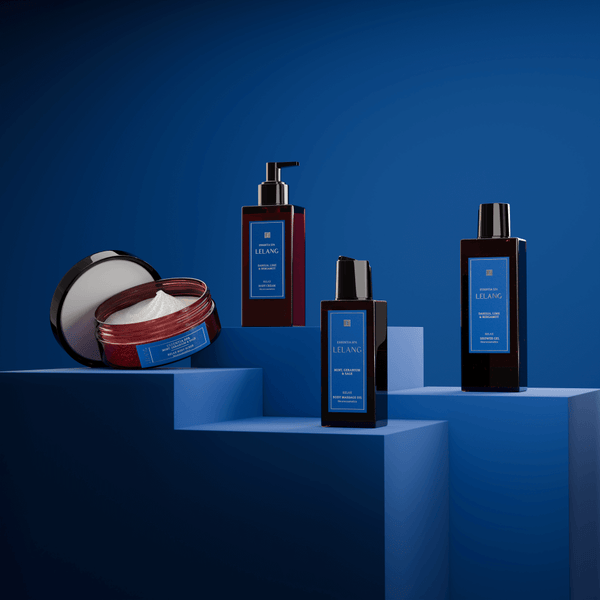
- Glass as the main container: completely recyclable and chemically inert, it does not release substances into the formulations.
- Uncoated paper cartons, without cellophane: we gave up the external plastic wrapping.
- Digital leaflet: a QR code on the packaging instead of a printed leaflet.
- Elimination of the secondary carton for some products. This is the most visible and also the most unpopular choice: we explained the reasons in our article on eco-friendly packaging.
- Paper bags instead of synthetic plastics for shipments.
The principle guiding us is simple: the most sustainable packaging is the packaging we do not produce. Before asking ourselves how to make a component recyclable, we ask whether it is really needed.
What we are addressing now
The most difficult issue concerns single-dose formats. From January 1, 2030, single-use packaging for cosmetics intended for the hospitality sector will be banned, and companies that also work with hotels and other facilities must find alternatives.
There are three possible approaches: treated paper or bioplastic sachets, thinner and separable barrier films, or refill systems with refillable and sanitizable dispensers. We are evaluating all three, and none is straightforward.
Why cosmetics require more time
There is a technical reason why our sector cannot change packaging as quickly as others: the container is part of the formula.
A new material must be revalidated together with the product it will contain. This requires stability tests covering the entire shelf life, compatibility testing between the formula and the container, microbiological validation, and compliance with EC Regulation 1223/2009 on cosmetic products. This is not bureaucracy: it is what ensures that a product remains safe until its expiry date.
That is why 2030 is not a comfortable deadline. Companies that start redesigning in 2029 risk not having enough technical time to complete the validations.
What remains unresolved
There are aspects for which, honestly, we do not yet have a definitive answer. National technical guidelines are expected in the coming months, as are harmonized standards on environmental labeling. Some interpretations from the Commission will only emerge along the way.
We would rather say so than promise a transition that has already been fully resolved. Our vision of sustainable beauty also starts here: sharing the steps as we take them, including those that are not yet finalized.
What you can do
The most effective action does not concern packaging but the product: choosing the right one the first time. A bottle bought on impulse and never finished becomes a complete waste — container, formula, and transportation — while a product suited to your skin is used to the very end.
That is why we place so much emphasis on consultations: fewer unsuitable products mean less waste, not just lower spending.