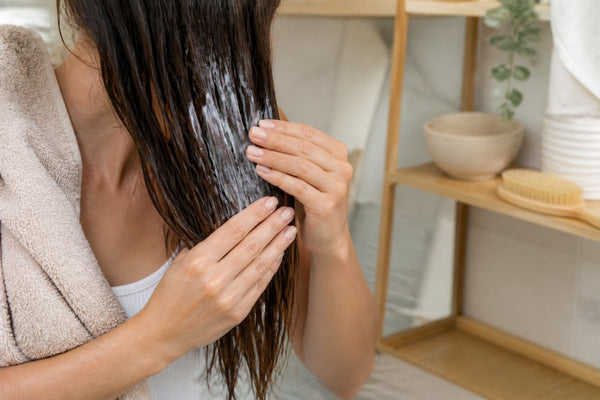


Water alone does not cleanse the skin. Wetting the surface is not enough to dislodge what settles on it, which explains why every cleansing product exists: it provides a mechanism that makes dirt transportable by rinse water.
Skin dirt has two origins. Some is physiological and comes from the skin itself: corneocytes that shed and hydrolipidic components of the intercorneocyte cement that are constantly renewed. The rest comes from the environment and settles on the skin from outside: dust, particulate matter produced by combustion in engines and heating systems, and residues from previously applied cosmetics.
The right cleanser is not the gentlest one in absolute terms. It is the one whose mechanism matches the type of dirt to be removed and the state of the skin barrier at that moment.
Article written by Elisa Avalle, founder of LeLang Skin Care and dermocosmetics specialist. Cover image generated with the support of artificial intelligence.
[INDICE:h2]
The four ways to cleanse the skin
The technical classification of cleansing is not based on a product’s commercial format, but on the physicochemical properties of the system that removes dirt. There are four mechanisms: dissolution, abrasion, adsorption or absorption, and emulsification. A real product often combines more than one, but knowing which one predominates is what allows you to choose.
Cleansing by dissolution
This is how wipes and pads soaked in an alcohol-based solution work. The low-molecular-weight solvent molecules in the formula, such as alcohol, water and short-chain hydrocarbons, dissolve dirt and carry it away.
The problem is that they are not selective: along with dirt, they also extract components of the hydrolipidic film and disrupt the intercorneocyte cement, the substance that holds the cells of the stratum corneum together. This may be acceptable for healthy skin on occasion. For dry, sensitive or already reactive skin, this mechanism worsens symptoms instead of resolving them, so it is not the recommended choice.
If you want to understand why this structure matters so much, I discussed it in the guide to the skin barrier and how it repairs itself.
Cleansing by abrasion: scrubs and peels
Here, cleansing takes place by mechanically removing the outermost layer of the stratum corneum. The aim is not just to remove dirt: it is to renew the surface and make it more even and smooth.
The scrub works through a mixed mechanism. The skin is massaged with a foaming base containing solid abrasive particles, and cleansing comes from exfoliation, physical removal and emulsification at the same time. It is especially suitable for oily and seborrheic skin.
The particles can be plant-based (powders from jojoba, coconut, apricot, almond, or hazelnut seeds), animal-based, or inorganic, such as silica, kaolin, and talc. What changes the result is the shape of the granule, not its origin: a smooth, spherical granule exfoliates predictably, while an angular one can cut the skin.
This technique should be used cautiously and less often on delicate or sensitive skin, since repeated mechanical stress can trigger or worsen irritation. For guidance on how to exfoliate and how often, I’ve written a dedicated guide to skin exfoliation, as well as one comparing it with chemical exfoliation using AHA, BHA, and PHA exfoliating acids.

RELAX BODY SCRUB Gentle salt body scrub With essential oils and neurocosmetics, for a relaxing exfoliation. Exfoliates and smooths th... Discover RELAX BODY SCRUB
Cleansing by adsorption and absorption
Adsorption is a physical phenomenon: small particles adhere to the surface of larger particles, which are then removed along with the dirt.
This is how fluid suspension masks work. They are formulated with a finely micronized phase dispersed in an aqueous medium: zinc oxide, titanium dioxide, kaolin, white clays, and green clays such as montmorillonites. The advantage is that they absorb surface sebum without excessively stripping the skin of lipids, so they can also be used on dry and sensitive skin. They are applied with a brush, which further reduces friction from solid particles on the skin. I’ve dedicated a separate page to green clay for the face.
Absorption works differently: three-dimensional polymer structures, microspheres, microsponges, or oat colloids trap fatty substances and flakes of dead skin inside themselves. Since these are non-greasy carriers, rinsing removes them easily, and they remain well tolerated even by delicate skin. For more on oats, the most common example in this category, see the dedicated page on oats for the skin.
Cleansing by emulsification: the most widely used mechanism
This is the principle behind almost all liquid cleansers. Molecules are used that can modify the surface tension of dirt adhering to the skin, so it can be emulsified and carried away with water.
These molecules have a polar, water-loving part and a nonpolar, fat-loving part. In an aqueous solution and in the presence of fatty substances, they organize into micelles: dirt ends up inside the micelle and is removed by rinsing.
It’s worth distinguishing between two terms that are often used as synonyms. Emulsifiers emulsify large amounts of fat and are used to make creams and milks. Surfactants work on small amounts of lipids and produce foam: they form the basis of rinse-off cleansers. In the glossary dedicated to surfactants, I explained the three families in detail and why formulas almost never use just one.
What’s inside a cleanser
A shower gel or body wash is made up of more than just surfactants. Its typical structure consists of four parts.
- A foaming base, that is, the blend of surfactants that cleanses and produces foam.
- A viscosity modifier. If the product is too runny, it won’t stay in your hand and will be difficult to apply. The most common rheology modifier used with anionic surfactants is sodium chloride, which increases micelle size. Beyond a certain amount, however, the viscosity suddenly drops.
- Auxiliary ingredients: pH adjusters, foam stabilizers, chelating agents that neutralize calcium and magnesium salts in hard water, superfatting agents that counteract the lipid-stripping effect of surfactants, preservatives, colorants, and fragrance.
- Cosmetic actives, which may or may not be present: plant extracts, emollients, amino acids, essential oils.
I wrote a separate article about shower gel, body wash, and shower cream, since commercial product names are more confusing than helpful.

RELAX SHOWER GEL Moisturizing shower gel for sensitive skin Shower gel with neurocosmetics, for a shower that relaxes skin and mind. ... Discover RELAX SHOWER GEL
Why washing too much makes things worse
The skin’s saprophytic microbiota is vulnerable. When it is reduced too much, pathogenic germs can take its place: excessive, harsh, or inadequate hygiene practices can therefore leave the skin less protected, not cleaner.
That’s why I don’t think it’s right to respond to a skin problem simply by washing more often or automatically switching to a daily antiseptic cleanser. The goal is to manage the problem without unnecessarily depleting the resident flora. I wrote about the role of this flora in my guide to the skin microbiome.
How to choose, by skin type
Body cleansing is the only cosmetic category that accompanies a person from childhood to old age, and over the course of that journey, the skin changes in structure. Here are some practical guidelines.
- Oily, seborrheic skin: cleansers with good degreasing power and weekly exfoliation. If the affected area is the upper back or chest, follow cleansing with a sebum-regulating treatment, and avoid comedogenic ingredients in rinse-off products.
- Dry skin: shower oils, superfatting cleansers, and formulas with oat extracts. Avoid prolonged bubble baths and alkaline soaps. Always apply an emollient lotion after washing, including to the soles of your feet.
- Reactive or sensitive skin: this is where you reduce the cleansing load. A shower oil and thermal or demineralized water are better choices; avoid alkaline soaps and very hard water. In this case, essential oils and plant extracts can also become a problem rather than a benefit.
- Mature skin: very gentle liquid cleansers or low-viscosity aqueous foaming cleansers enriched with emollients. Avoid abrasive, alcohol-based, or overly hydrophilic products.
If you’re not sure which category you fall into, start by distinguishing dry skin from dehydrated skin, because the right cleanser can be completely different.
What you do after washing matters as much as the cleanser
Rinse thoroughly: surfactant residue left on the skin keeps working even after rinsing. Pat dry with a towel rather than rubbing, paying particular attention to skin folds, including the armpits and groin, where residual moisture can promote maceration and irritation.
Apply the cream while your skin is still slightly damp, as it holds water in the tissues better at that point.

RELAX BODY CREAM Relaxing moisturizing body cream With neurocosmetics and 4 hyaluronic acids, for soothed and nourished skin. Multi-l... Discover RELAX BODY CREAM
When cleansing isn’t enough
Cleansing products have a specific purpose: to remove dirt while preserving the skin barrier. They are not treatments.
If your skin has persistent redness, burning, itching, maceration in the folds, or lesions, the answer isn’t to switch shower gel: you need an assessment by a doctor or dermatologist, who can identify the cause and recommend the right course of action. The same applies to flaking or dryness that doesn’t improve despite proper cleansing.
At LeLang partner pharmacies, you don’t choose a cleanser off the shelf. First, we assess the condition of your skin barrier. That’s the difference between buying a product and getting expert advice. Find your nearest pharmacy here.
Not sure which cleanser your skin needs?
In a free virtual consultation, we’ll look at the condition of your skin barrier together and build a cleansing routine that’s right for your face and body.
On the website: Body skincare · Face cleansers · Sensitive skin
Frequently asked questions
Why isn't water alone enough to clean the skin?
Because much of the dirt on the skin does not dissolve in water. Corneocytes that shed, lipids that renew, and external substances such as dust, particulates, and cosmetic residues accumulate on the skin. Removing them requires a mechanism that makes them transportable by rinse water, and that is the job of every cleansing product.
How does a cleanser clean the skin?
There are four mechanisms: dissolution, typical of alcohol-based wipes; abrasion, as with scrubs and peels; adsorption or absorption, used by clays, powders, and colloidal oatmeal; and emulsification, the principle behind liquid cleansers with surfactants. A product often combines them, but knowing which one predominates is what allows you to choose well.
Does washing often make your skin cleaner?
No. The skin's resident microbiota is vulnerable, and if it is reduced too much, pathogenic germs can take its place. Excessive or harsh cleansing therefore leaves the skin less protected, not cleaner. If you have a skin problem, it is best to avoid washing more often or routinely switching to a daily antiseptic cleanser.
Which cleanser should you choose for dry skin?
Shower oils, lipid-replenishing cleansers, and formulas with oat extracts are recommended, while avoiding prolonged bubble baths and alkaline soaps. After washing, always apply an emollient lotion to skin that is still slightly damp. Before choosing, it is useful to determine whether the skin is dry or dehydrated, because the right cleanser differs completely.
When should you see a dermatologist instead of trying a new cleanser?
When persistent redness, burning, itching, maceration in the folds, or lesions appear, or when dryness and flaking do not improve despite proper cleansing. Hygiene cosmetics have a specific purpose: to remove dirt while respecting the skin barrier. In these cases, the answer is not to switch shower gel but to seek a medical evaluation to identify the cause.
Sources for this article
- Del Pozo A. Body hygiene. Fundació IL3 – University of Barcelona, 2023.
- Carbajo J.M. Cosmetic cleansing and hygiene, in Pharmaceutical care in dermopharmacy. General Council of Official Colleges of Pharmacists, Madrid, 2008, pp. 159-178.
- Estrade M.N. Facial and body hygiene and care, in Cosmetology tips. STM Editores, Barcelona, 2002, ch. 2, pp. 31-90.
- Regulation (EC) No 1223/2009 of the European Parliament and of the Council on cosmetic products.
Elisa Avalle is the founder of LeLang Skin Care and specializes in dermocosmetics at the University of Barcelona.