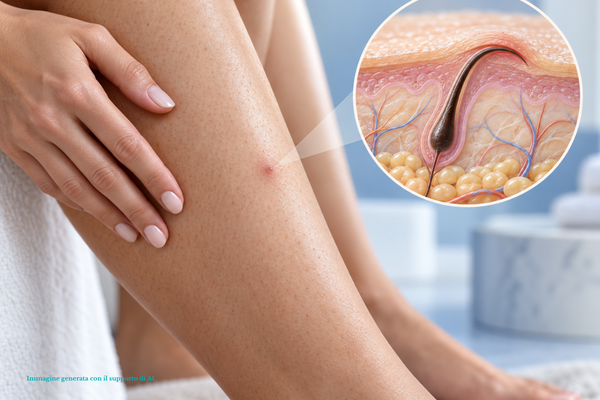



Every year, the arrival of the warmer season means one thing: sun protection. Spring encourages us to spend more time outdoors, walking or exercising, and therefore to expose ourselves to the sun for the first time after winter. But which one should you choose in 2026?
Modern sunscreens are rich in vitamins, minerals, and targeted active ingredients: they provide the skin not only with protection from UV rays, but also hydration, nourishment, and an action against free radicals, with formulations that vary according to skin type.
In 2026, sun protection is no longer a seasonal or holiday-only step: it is an everyday product to apply at the end of your skincare routine and under makeup, which should be lightweight while maintaining a high SPF.
[INDICE:h2]
Why sun protection is so important
It is one of the most useful and consistent steps you can add to your facial skincare routine. It does more than simply prevent redness: it protects the skin from a range of daily stresses that cause loss of radiance, uneven tone, spots, and above all premature aging.
Skin spots, once they appear, are difficult to manage quickly. This is not about treating the sun as an enemy, but about exposing yourself more consciously by choosing high, broad-spectrum protection that covers UVB and UVA. If you want to understand how the two families of filters work, we discuss them in the guide to chemical and physical sunscreens.
Then there is the chapter on homemade alternatives. In recent months, the idea of replacing cosmetics with animal fats has come back into fashion, and there is no shortage of content presenting them as a healthier choice for sun exposure too: I wrote about it in beef tallow on the face. The summary is simple: a sun protection factor is measured with a standardized test, and no fat applied by eye has one.
A question that often comes up: does sunscreen block vitamin D synthesis? Available studies have not demonstrated a significant correlation. We discuss it in detail in the article on sunscreen and vitamin D.
The damage no one talks about: the sun weakens the skin's defenses
Sunscreen is usually justified with two arguments: wrinkles and dark spots. There is a third, less well known and more serious one.
The epidermis contains Langerhans cells: they are the skin's surveillance network, intercepting foreign substances or infectious agents and presenting them to lymphocytes, thereby initiating the immune response. The skin is not merely a physical barrier - it is in every respect an immune compartment, with its own associated lymphoid tissue.
The point is this: ultraviolet radiation reduces the number of Langerhans cells and alters their morphology. This results in local immunosuppression in exposed areas, which the literature links to the development of sun-related skin cancers. In other words, sunscreen does not merely protect the skin's appearance: it protects its ability to monitor itself.
There is one detail that makes this more significant as the years go by: the number of Langerhans cells also decreases with age. In the chronically exposed areas of an older person - the face, neck, and backs of the hands - the two effects combine. It is an argument that carries more weight than any discussion of wrinkles.
What about melanin? It protects, but it is not a shield
The melanin barrier is the most effective defense the body has against solar radiation, and eumelanin - the dark pigment - performs this role far better than pheomelanin, which is characteristic of light phototypes and red hair. Melanins also have an antiradical function: they capture free radicals, and given that UV radiation is a powerful inducer of them, this is far from a secondary defense.
However, this does not justify the opposite conclusion. Higher pigmentation reduces the risk of erythema, but does not eliminate it, and it does not protect against either local immunosuppression or photoaging. The difference between phototypes is not between those who need sunscreen and those who do not: it is between those who need it a great deal and those who need it nonetheless.
How to choose based on skin type
Dry and dehydrated skin: nourishment and barrier support
Generally dry skin often has a more fragile skin barrier and is therefore more vulnerable. Comforting, enveloping textures enriched with hyaluronic acid are best, creating a film that helps limit water evaporation while shielding the skin from the sun.
Combination and blemish-prone skin: lightweight and mattifying
Here, lightweight, fluid and fast-absorbing formulas are best. The addition of niacinamide or peptides helps regulate sebum and refine skin texture, avoiding the shiny finish typical of traditional sunscreens.
This is a decisive factor for those with acne-prone skin: skipping sunscreen because it feels “heavy” leads to worsening at the end of summer, a phenomenon we explored in depth in the article on sun, acne and the rebound effect.
Sensitive and reactive skin: calm and resilience
Those with skin that reddens easily tend to do better with formulas containing postbiotic ferments, which help support the skin microbiome and reduce silent inflammation caused by heat and temperature fluctuations.
Mature or blemish-prone skin: antioxidant action
Those who want to prevent or reduce hyperpigmentation can opt for “hybrid” sunscreens, rich in antioxidants and vitamin C: they do more than just shield the skin; they also boost radiance.
If sun spots have already appeared, protection remains the first step but is not enough on its own: in the dedicated guide, you’ll find out how they form and which active ingredients help reduce them.
| Skin type | Key ingredient | Main concern |
|---|---|---|
| Dry | Hyaluronic acid | Hydration |
| Combination or oily | Niacinamide | Dry-touch texture |
| Sensitive | Postbiotic ferments | Microbiome support |
| With blemishes | Vitamin C | Evenness and radiance |
Spot Defence SPF 50: a modern approach
It is a fluid that combines SPF 50 protection with active ingredients typical of contemporary skincare.

SPOT DEFENCE 50 SPF SPF 50 anti-dark-spot facial sunscreen serum With encapsulated vitamin C, plant glycogen and postbiotic ferments, for... Discover SPOT DEFENCE 50 SPF
Stabilized vitamin C
While filters shield the skin from radiation, vitamin C neutralizes the free radicals that still form, supports collagen synthesis, and brightens the complexion.
Postbiotic ferments
Lactobacillus ferments (Lactobacillus Ferment) are a postbiotic, meaning a ferment without live cells: they support the balance of the skin microbiome, improving skin resilience and reducing signs of sensitivity caused by pollution and atmospheric agents.
Plant glycogen
Plant glycogen provides cells with an energy substrate useful for repair processes and the synthesis of structural proteins, supporting the production of collagen and hyaluronic acid.
Maritime pine
It completes the formula with antioxidant and soothing properties, and helps support the elastin and collagen fibers.
Reapplication: where almost everyone gets it wrong
Protection should be reapplied every two hours of exposure and after every swim or intense sweating. This is where most sun protection routines fail, and not because of laziness: the product simply isn't within reach. That's why the single-dose pocket format exists.

Face Sunscreen SPF 50 Pocket Size, Travel Size (5 pcs) Pocket-sized SPF 50 facial sunscreen in single doses The problem isn’t applying sunscreen. It’s reapplying it. Smalle... Discover Face Sunscreen SPF 50 Pocket Size, Travel Size (5 pcs)
In conclusion
Good daily protection helps to:
- prevent the appearance and worsening of skin blemishes;
- maintain a more even skin tone;
- slow photoaging and the appearance of wrinkles;
- limit transepidermal water loss;
- preserve the network of Langerhans cells, meaning the skin's immune surveillance.
If your skin is reactive after sun exposure, you will find targeted advice in the guide on how to repair the skin barrier after sun exposure.
The protection you really need also depends on how your skin reacts to the sun, meaning your phototype, and on any photosensitizing medications. These are assessments best made by talking to someone: find LeLang products at our partner pharmacies throughout Italy.
15-minute free consultation with the founder
Not sure which sun protection is best suited to your skin? Book a free virtual skincare consultation with Elisa Avalle, founder of LeLang: together, we will assess your skin type and ideal sun-care routine.
Sources for this article
01 Gilchrest B.A., Murphy G.F., Soter N.A., Effect of chronologic aging and ultraviolet irradiation on Langerhans cells in human epidermis, Journal of Investigative Dermatology, 79, 1982, pp. 85-88
02 Bergfelt L., Langerhans cells, immunomodulation and skin lesions. A quantitative morphological and clinical study, Acta Dermato-Venereologica Supplementum, 180, 1993, pp. 7-37
03 Jimbow K., Fitzpatrick T.B., Wick M.M., Biochemistry and Physiology of Melanin Pigmentation, in Physiology, Biochemistry and Molecular Biology of the Skin, 2nd ed., New York, 1991, pp. 873-909
04 Choi K.L., Sauder D.N., The role of Langerhans cells and keratinocytes in epidermal immunity, Journal of Leukocyte Biology, 39, 1986, pp. 343-358
On the website: sunspots on the face · chemical and physical filters · sensitive skin after sun exposure · anti-dark-spot face creams and serums