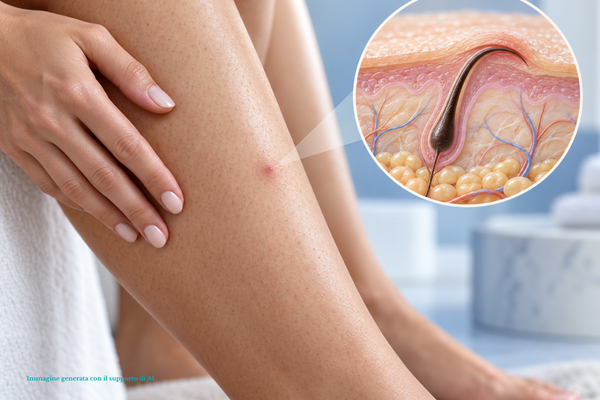
A person with very fair skin and a person with very dark skin have a similar number of melanocytes, the cells that produce melanin, in the same area of the body. The difference in color is not due to how many cells there are, but to how much melanin they produce, what type it is, and how they distribute it. This is the starting point for understanding tanning, dark spots, and the limitations of any skin-lightening cosmetic product.
In summary
- Melanin is the pigment that gives skin, hair, and eyes their color, and is produced by melanocytes in the basal layer.
- There are two main forms: eumelanin, which is brown-black and more protective, and pheomelanin, which is red-yellow and less protective.
- Skin color depends on the amount, type, and distribution of melanin, not on the number of melanocytes.
- A tan is a defense response, but it offers little protection: it does not replace sunscreen.
- Dark spots are melanin that has been produced or distributed unevenly; a cosmetic product can affect some steps, but it cannot make them disappear overnight.
Article written by Elisa Avalle, founder of LeLang Skin Care and dermocosmetics specialist. Cover image generated with the support of artificial intelligence.
[INDICE:h2]
Where melanin is produced
Melanocytes are found in the deepest layer of the epidermis, the basal layer. They have branch-like extensions called dendrites, which reach neighboring cells. Each melanocyte is in contact with several dozen keratinocytes: this group is called the epidermal melanin unit.
Melanin is produced inside small organelles called melanosomes, which mature and are then transferred to keratinocytes. Once there, they arrange themselves above the nucleus like a small umbrella, protecting the DNA from ultraviolet radiation. The structure of the skin layers is described in how the skin is made.
How it forms: the role of tyrosinase
It starts with an amino acid, tyrosine. An enzyme, tyrosinase, converts it into DOPA in successive steps, and then into dopaquinone. From here, the pathway splits:
- Eumelanin: it forms when dopaquinone follows the main pathway. It is brown-black, absorbs UV radiation well, and neutralizes some free radicals.
- Pheomelanin: it forms when cysteine, a sulfur-containing amino acid, enters the reaction. It is reddish-yellow, predominates in very light skin and red hair, and offers less protection. Under UV rays, it may even contribute to the formation of reactive oxygen species.
Tyrosinase is the rate-limiting step in the entire chain. That is why many depigmenting ingredients work directly on it, as in the case of hydroquinone, which is banned in cosmetics, and its alternatives.
Why skin comes in different colors
It is important to distinguish between the two: the number of melanocytes varies from one area of the body to another, but is similar in people with light and dark skin. What changes is:
- how much melanin they produce;
- the ratio of eumelanin to pheomelanin;
- the size and distribution of melanosomes: in darker skin, they are larger and scattered individually; in lighter skin, they are smaller and clustered.
These differences form the basis of the classification of skin phototypes, which describes how skin reacts to the sun.
Tanning: a defense, not protection
When the skin is exposed to the sun, its color changes in two stages.
Immediate pigmentation
It appears within minutes, mainly due to UVA rays, and lasts from a few hours to a few days. No new melanin is formed: the existing melanin oxidizes and is redistributed.
Delayed tanning
It becomes visible after a few days and is mainly linked to UVB rays. Melanocytes produce new melanin and transfer it in greater quantities. This is a sign that the skin has registered damage and is trying to defend itself.
The point is that the protection offered by tanned skin is modest, comparable to a very low-SPF sunscreen. It is not enough to prevent sunburn or photoaging, which is why sunscreen is also essential for people who tan easily.
Not just UV: visible light, hormones, inflammation
Melanin does not respond only to ultraviolet rays. In darker skin types, visible light can also trigger long-lasting pigmentation; I discussed this in the article on blue light.
Hormones, especially estrogen, make melanocytes more reactive: this is the mechanism behind melasma. And after a pimple, scratch, or irritation, inflammation can leave a dark spot that lasts for weeks or months.
When melanin forms spots
A spot is caused by excess melanin production or its uneven distribution in a specific area. The most common types are sunspots, melasma, and spots that appear after inflammation. The differences between the various types are covered in the guide to skin discoloration and in the article on hyperpigmentation.
The opposite can also happen: areas where melanin is absent, as in vitiligo.
And in hair: why it turns white
Hair color also comes from melanin, produced by melanocytes located in the bulb at the base of each hair. There is one difference compared with skin: pigment forms only during the first part of each hair’s growth phase and is deposited mainly in the middle part of the hair shaft. The cuticle, the outer layer, remains transparent.
Over the years, the follicle’s melanocytes run out, and new hairs grow without pigment: these are white hairs. The “gray” effect is usually the result of white hairs mixed with hairs that are still colored. The age at which they appear depends mainly on genetics. Very early graying can be associated with deficiencies, such as vitamin B12 deficiency, or thyroid problems, and in that case should be evaluated by a doctor.
To date, no cosmetic can restore color to hair that is already white: hair dyes cover it, but do not restore it.
A cosmetic product acts on the superficial layers of the skin and does not treat any clinical condition, in accordance with EC Regulation 1223/2009. A spot that changes shape, color, or size, bleeds, or has appeared recently should always be shown to a dermatologist.
Where a cosmetic product can act
The melanin pathway has several links, and cosmetic ingredients work at different points:
- Prevent stimulation: daily sun protection is the most effective step.
- Slow down production: ingredients that interfere with tyrosinase.
- Reduce the transfer of melanosomes to keratinocytes: this is the mechanism being studied for niacinamide.
- Speed up removal of existing melanin with gentle exfoliation.
- Limit oxidative stress with antioxidants such as vitamin C.
Consistency and time are key: the epidermis takes weeks to renew itself, and results are assessed over the course of months.

SPOT DEFENCE 50 SPF SPF 50 anti-dark-spot facial sunscreen serum With encapsulated vitamin C, plant glycogen and postbiotic ferments, for... Discover SPOT DEFENCE 50 SPF

Face Sunscreen SPF 50 Pocket Size, Travel Size (5 pcs) Pocket-sized SPF 50 facial sunscreen in single doses The problem isn’t applying sunscreen. It’s reapplying it. Smalle... Discover Face Sunscreen SPF 50 Pocket Size, Travel Size (5 pcs)
Frequently asked questions
What is melanin?
Melanin is the pigment that gives color to the skin, hair, and eyes. It is produced by melanocytes, cells in the deepest layer of the epidermis, inside small organelles called melanosomes. These are then transferred to nearby cells, called keratinocytes, where they arrange themselves over the nucleus like a little umbrella and protect DNA from ultraviolet radiation.
What is the difference between eumelanin and pheomelanin?
These are the two main forms of melanin. Eumelanin is brown-black, absorbs UV rays well, and neutralizes some free radicals. Pheomelanin forms when cysteine is involved in the reaction. It is red-yellow in color and is more prevalent in very light skin and red hair. It offers less protection and can contribute to the formation of reactive oxygen species when exposed to UV rays.
Why do people have different skin colors?
It doesn't depend on the number of melanocytes, which is similar in light and dark skin. Instead, what differs is the amount of melanin produced, the ratio of eumelanin to pheomelanin, and the size and distribution of melanosomes: in dark skin, they are larger and scattered individually, while in light skin, they are smaller and grouped together. These differences form the basis of the phototype classification.
Does a tan protect you from the sun?
It offers little protection. A tan is a two-stage defense response: immediate pigmentation, mainly caused by UVA rays, in which existing melanin is oxidized, and delayed tanning, linked to UVB rays, in which new melanin is produced. The protection it provides is comparable to a very low SPF, so sunscreen is necessary even for people who tan easily.
Why do dark spots form on the skin?
A spot is excess melanin or melanin distributed unevenly in a specific area. It can be triggered by UV rays, visible light in darker phototypes, hormones, as in melasma, and inflammation following a pimple or scratch. A spot that changes shape, color, or size, bleeds, or has appeared recently should be shown to a dermatologist.
The next step
If you have a spot and don’t know what type it is, the first step is to identify it. The pharmacist at LeLang partner pharmacies and parapharmacies can help you establish a routine and tell you when it’s time to see a dermatologist.
Want to know where to start?
Book a free virtual consultation: together, we’ll assess your skin and create a personalized protocol.
Sources for this article
- Costin G.E., Hearing V.J. (2007). "Human skin pigmentation: melanocytes modulate skin color in response to stress". The FASEB Journal, vol. 21, no. 4, pp. 976-994.
- Brenner M., Hearing V.J. (2008). "The protective role of melanin against UV damage in human skin". Photochemistry and Photobiology, vol. 84, no. 3, pp. 539-549.
- Thong H.Y. et al. (2003). "The patterns of melanosome distribution in keratinocytes of human skin as one determining factor of skin colour". British Journal of Dermatology, vol. 149, no. 3, pp. 498-505.
- Mahmoud B.H. et al. (2010). "Impact of long-wavelength UVA and visible light on melanocompetent skin". Journal of Investigative Dermatology, vol. 130, no. 8, pp. 2092-2097.
- Hakozaki T. et al. (2002). "The effect of niacinamide on reducing cutaneous pigmentation and suppression of melanosome transfer". British Journal of Dermatology, vol. 147, no. 1, pp. 20-31.
- Tobin D.J. (2009). "Aging of the hair follicle pigmentation system". International Journal of Trichology, vol. 1, no. 2, pp. 83-93.
- Regulation (EC) No 1223/2009 of the European Parliament and of the Council on cosmetic products.
Where to go next: Phototypes · Sun spots · Skin discoloration
Discover the products: Discoloration and dark spots · Photoaging