


[INDICE:h2]
Not all dark patches are sunspots. When hormonal changes are involved, the condition is called melasma or chloasma, and during pregnancy, a pregnancy mask. These patches appear mainly on the cheekbones, forehead, and above the lips, and often have a significant impact on psychological well-being.
Melasma is a form of hyperpigmentation caused by an abnormal accumulation of melanin, resulting from overactive melanocytes. It appears as irregular but often symmetrical brown or grayish patches, typically on the forehead or above the upper lip - the so-called "mustache".
What causes melasma
Hyperpigmentation can be caused by genetic predisposition, acne, eczema, exposure to UV rays, medications, and hormonal changes. Melasma is a particular form, however, and is very common during pregnancy - hence the name pregnancy mask.
Under a microscope, the patches are essentially identical. Melasma refers to chronic acquired hyperpigmentation in areas exposed to light; chloasma refers to the same phenomenon triggered by pregnancy. Pregnancy hormones stimulate melanocytes, and in many cases the condition tends to regress after childbirth.
Melasma is strongly linked to hormonal imbalances: oral contraceptives, pregnancy, and high estrogen levels. On their own, however, hormones would do little: the sun is what activates the patch. Intense heat - ovens, saunas, and nearby heat sources - and stress can also worsen the condition.
Epidermal, dermal, or mixed
It is a distinction that greatly changes expectations, and it is worth knowing about.
- In epidermal melasma, the pigment is found in the superficial layers. The patch appears well-defined and brown: this is the form that responds best to cosmetic treatments.
- In dermal melasma, the pigment is deeper. The edges are blurred and the color takes on a grayish-blue hue: cosmetics can do little here, and a specialist assessment is needed.
- Mixed melasma combines the two patterns and is the most common type.
This applies to all forms of hyperpigmentation, not just melasma: it is the depth at which the pigment is located, more than its intensity, that determines whether a cosmetic active ingredient can reach it and how long it will take.
Melasma is among the most difficult dyschromias to treat and the most prone to recurrence. A well-structured cosmetic routine can noticeably reduce its appearance, but in extensive or resistant cases, a dermatological evaluation is the right step: medical treatments exist that cosmetics cannot replace.
The strategy: exfoliate, modulate, protect
1. Gentle exfoliation
Blemished skin needs to renew its pigment-laden cells. The ingredient of choice is mandelic acid: an alpha hydroxy acid with a large molecule that penetrates slowly and removes pigmented cells without causing irritation.
Gentleness is not a luxury here: aggressive exfoliation on melasma makes it worse, because inflammation further stimulates melanocytes.

MANDELIC ENZYMATIC SOFT PEEL Mandelic Acid and Enzymatic Facial Peel Highly tolerated, gentle exfoliant that stimulates cell turnover. Removes de... Discover MANDELIC ENZYMATIC SOFT PEEL
2. Modulating melanin production
The FeruliC + HA serum contains stabilized vitamin C in the form of 3-O-ethyl ascorbic acid, which acts on tyrosinase, the key enzyme in melanin synthesis. Ferulic acid enhances photoprotection, while vitamin E completes the antioxidant synergy.

FERULIC + HA SERUM Vitamin C and ferulic acid face serum Antioxidant and tone-evening, with dual hyaluronic acid. Helps prevent dark sp... Discover FERULIC + HA SERUM
For combination and oily skin, a lightweight cream based on niacinamide, which acts on the transfer of melanin to keratinocytes and also has a soothing effect.

ACNEREBAL CREAM Cream for hormonal acne and oily skin, mattifying effect Sebum-regulating cream with Azeloglycine, Zincidone® and Nia... Discover ACNEREBAL CREAM
Among the active ingredients that dermocosmetic research associates with hormonal dyschromia is azelaic acid, valued for its selective action on overactive melanocytes and its good tolerability.
If you're choosing a serum and don't know where to start, the criteria for finding your way based on the type of dark spot are in the guide on how to choose a dark-spot serum.
3. Sun protection, every day
For melasma, sun protection is not an accessory: it is the treatment. It should be used all year round, even when it rains, because UVA rays pass through clouds and glass. Without consistent photoprotection, no brightening active can deliver lasting results.
It is useful to know that melasma also responds to visible light, not only UV rays: this is why dermatologists often recommend filters with tinted mineral pigments, which also shield that part of the spectrum. To help you choose among the formulas, you can find a comparison in the guide to the best facial sunscreen for dark spots.

SPOT DEFENCE 50 SPF SPF 50 anti-dark-spot facial sunscreen serum With encapsulated vitamin C, plant glycogen and postbiotic ferments, for... Discover SPOT DEFENCE 50 SPF
Spot Defence works with UVA and UVB filters and contains no colored pigments. If your dermatologist has recommended shielding visible light as well, you can apply a foundation or tinted mineral powder over it: the iron oxides that provide the color are precisely the pigments that serve this purpose.
For travel and reapplication, the single-dose pocket format solves the most common practical problem.

Face Sunscreen SPF 50 Pocket Size, Travel Size (5 pcs) Pocket-sized SPF 50 facial sunscreen in single doses The problem isn’t applying sunscreen. It’s reapplying it. Smalle... Discover Face Sunscreen SPF 50 Pocket Size, Travel Size (5 pcs)
Melasma of pregnancy: how to prevent it during pregnancy
Melasma of pregnancy cannot be ruled out completely, because the hormonal component is beyond our control. However, the likelihood of it appearing or becoming darker can be greatly reduced by addressing what triggers it: light and heat.
- SPF 50 every morning, from the first trimester and in every season, reapplied every two hours when outdoors;
- a wide-brimmed hat and sunglasses during the central hours of the day, because under direct sunlight no cream is enough on its own;
- be careful with heat: saunas, steam baths and nearby heat sources stimulate melanocytes even without sunlight;
- no irritating products and no hot waxing on the upper lip, because inflammation leaves pigment behind;
- an antioxidant in the morning, such as vitamin C, to complement sun protection.
Anyone who has already had melasma during a previous pregnancy, or pill-related melasma, has a higher chance of seeing it return: in these cases, protection should begin immediately, without waiting for the first spot to appear.
Melasma during pregnancy and breastfeeding: what can be used
Melasma of pregnancy appears precisely when choosing cosmetics becomes more selective. The good news is that the main tools all remain available: two-thirds of the strategy - protection and modulation - can be continued without any problems.
They remain safe to use:
- Sun protection, which is even more crucial during this phase: mineral filters are the most common choice during pregnancy;
- Niacinamide and vitamin C, both well tolerated;
- Mandelic acid at cosmetic concentrations, with applications spaced apart.
Retinol and its derivatives are instead put on hold, as are professional peels, which can be resumed after breastfeeding. Hydroquinone, often mentioned online, is not permitted in cosmetics in Europe: it is a molecule that falls under medical supervision.
During pregnancy, every choice, including cosmetic products, should be discussed with your gynecologist or dermatologist. Cosmetic products work on the appearance of the patch: during this phase, the hormonal component rebalances on its own after childbirth.
Melasma on the upper lip
It is the most common location and also the most difficult to manage, because this area has an additional factor that is not present elsewhere: hair removal.
If you have melasma on your “upper lip,” avoid hot waxing: pulling and heat cause inflammation, and inflammation stimulates melanocytes. This is why many people notice that the patch becomes darker in the days following hair removal. It is better to use methods that do not traumatize the skin, such as threading, and never at the same time as using exfoliants.
An important clarification: intense pulsed light and lasers are not recommended for melasma; in fact, they can make it worse. Heat and light stimulation activate already hyperreactive melanocytes, creating a real risk of a more pronounced recurrence. On solar lentigines, on the other hand, they are recommended treatments: this is one of the reasons why a correct diagnosis should always precede treatment. If you are considering a device-based treatment, speak with a dermatologist who knows your situation first.
Patience is needed
Melasma does not clear up quickly: the first results with vitamin C and gentle exfoliants appear after four to eight weeks of consistent use, and the complete process takes months. An incomplete course will not produce results.
Frequently asked questions
How is melasma on the face reduced?
Through three combined actions: gentle exfoliation to promote the turnover of pigmented cells, actives that modulate melanin synthesis such as vitamin C and niacinamide, and above all daily sun protection. Without the latter, the other two steps do not produce stable results. For deep or resistant forms, a dermatologist's evaluation is necessary.
Why does melasma occur?
It arises from the combination of a hormonal predisposition — pregnancy, oral contraceptives, elevated estrogen levels — and exposure to light and heat. Hormones make melanocytes more reactive, but it is the sun that concretely triggers pigment production. Genetic predisposition and phototype also play a role.
Does melasma go away on its own?
Chloasma gravidarum often fades on its own in the months after giving birth, as hormonal balance is restored. Melasma unrelated to pregnancy, on the other hand, tends to persist and recur, especially with the arrival of summer. In both cases, consistent photoprotection makes the difference between lasting improvement and improvement lost after the first exposure.
How long does it take for the pregnancy mask to disappear after giving birth?
In most cases, the color gradually fades over three to six months after giving birth as hormonal balance is restored, and breastfeeding may extend this timeframe slightly. Continuing sun protection during this phase is what prevents you from having to start over the following summer.
Which products should you use for melasma?
A gentle mandelic acid exfoliant once or twice a week, a serum with stabilized vitamin C and ferulic acid in the morning, and a broad-spectrum SPF 50 sunscreen — preferably with mineral pigments, because melasma also responds to visible light. Avoid aggressive exfoliants and treatments that generate heat.
Do natural remedies work?
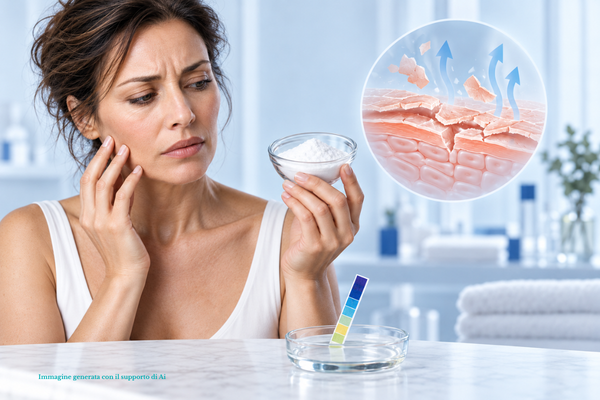
Some plant-based ingredients have a documented effect on tyrosinase, such as licorice. Homemade preparations based on lemon or baking soda are instead not recommended: lemon is photosensitizing and can cause even more pronounced dark spots, while baking soda alters the skin's pH and causes irritation. For a condition that worsens with inflammation, they are counterproductive.
In conclusion
Melasma requires a patient and gentle approach, where sun protection is more important than any brightening active. For a complete overview of the other forms of skin discoloration, you can find everything in the guide to facial discoloration.
Free 15-minute consultation with the founder
If you want to understand which approach is right for your situation, request a free 15-minute consultation with Elisa Avalle, founder of LeLang Skin Care.