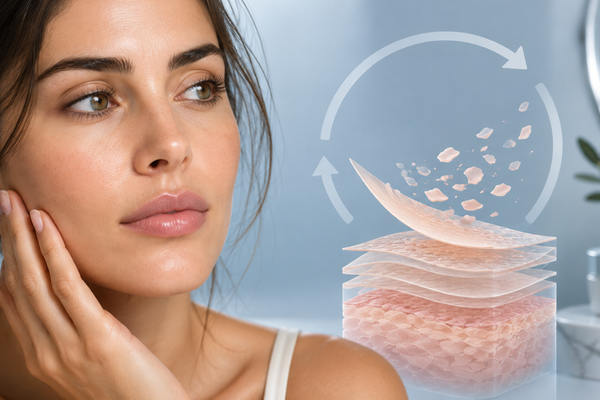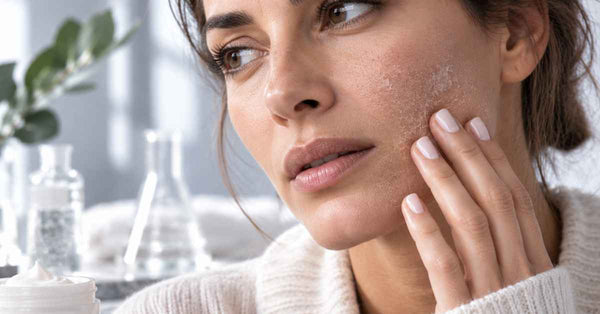



Sometimes we go through a period when we do not feel comfortable in our own skin. Or we return from vacation and find it thicker and rougher, with a dull complexion and deep dark circles. Skin that seems to have lost its energy, looking dull and lacking vitality.
Behind this condition there is often a precise yet little-known biological mechanism: glycation. Let’s look at what it is, why it affects the appearance of the face, and how it can be slowed down through both internal approaches and targeted treatments.
[INDICE:h2]
Glycation: what it is and why it matters
The way we treat our skin topically affects its appearance, but the main cause of many age-related imperfections often lies elsewhere: in an unbalanced lifestyle and a diet rich in sugar, simple carbohydrates, and fried food.
Glycation occurs when sugars such as glucose and fructose form non-enzymatic bonds with proteins and lipids, creating altered molecules called AGEs (Advanced Glycation End Products), or glycotoxins.
In addition to the food itself, preparation methods also matter: browning and frying promote the formation of AGEs. Smoking and UV rays are also risk factors.
How glycation affects the skin
During the process, glucose and fructose bind to the amino acids of the skin’s two key proteins: collagen and elastin. These proteins are found in the extracellular matrix, which holds cells and tissues together.
Collagen maintains firmness and elasticity, while elastin allows the skin to return to its original shape after being stretched or contracted.
The damage glycation causes to collagen and elastin fibers cannot be reversed or repaired. However, its progression can be slowed, which is why it is worth understanding how it works.
AGE-saturated proteins lose the ability to function properly with surrounding cells and proteins, leading to sagging skin and the appearance of wrinkles. Glycation also induces oxidative stress, an imbalance between free radicals and antioxidants that causes further cellular damage.
In practice, the proteins most exposed to glycation are the same ones that keep a youthful complexion elastic and firm. When they bind to sugars, they become weaker and less flexible, and the result appears on the surface as wrinkles, sagging, and loss of radiance.
The anti-glycation diet: what really matters
When it comes to food, a special diet is not necessary; what matters is knowing where AGEs are concentrated. Two things matter: how much sugar is circulating and how the food is cooked.
The cooking method matters as much as the ingredient
This is the least well-known aspect and perhaps the most useful. High-temperature, dry cooking methods—frying, grilling, intense browning in the oven, and searing—multiply AGE formation in food, even when the food itself is healthy. Moist cooking methods at lower temperatures—steaming, boiling, stewing, and braising—produce far fewer.
A practical measure that reduces AGE formation in meat is marinating it with an acidic ingredient, such as lemon juice or vinegar, before cooking.
The foods that have the greatest impact
| To limit | To prioritize |
|---|---|
| Fried foods and heavily browned or charred foods | Vegetables, legumes, and fresh fruit |
| Simple sugars, industrial sweets, sugary drinks | Slow-release whole grains |
| Processed meats and highly aged cheeses | Fish, steamed or stewed |
| Packaged snacks and refined baked goods | Spices and aromatic herbs (cinnamon, turmeric, rosemary) |
An honest clarification: research into dietary AGEs is evolving, and AGEs produced internally by metabolism are just as significant as those introduced through food. This does not make paying attention to your diet pointless, but it puts the idea that an “anti-glycation diet” alone can stop the process into perspective: overall blood sugar stability over time matters more.
How to slow down the glycation process
Eliminating sugar from your diet is not the solution: sugars are essential for the cells’ energy metabolism. Glycation occurs naturally throughout life, even when eating healthily.
It cannot be stopped, but it can be slowed down. A multifaceted approach is needed:
- reduce simple sugars, favoring complex carbohydrates such as brown rice and whole-grain bread, which are converted into glucose more slowly;
- consider taking carnosine, a dipeptide that has been shown to protect against AGE accumulation, in consultation with your doctor;
- support the skin with topical active ingredients that stimulate collagen and elastin and counteract oxidative stress.
Active ingredients that help counteract glycation damage
From a cosmetic perspective, ingredients are needed that act on two levels: stimulating the synthesis of new collagen and protecting existing collagen from degradation.
Collagenetic Serum works precisely in this direction: it combines plant-based biotech collagen, gardenia stem cells that reduce collagenase activity, and kudzu extract. The latter deserves a precise explanation: puerarin, its main isoflavone, reduced the proportion of cells that had stopped producing matrix in a study on senescent human fibroblasts—and this is a different pathway from the antioxidant one, because free radicals did not decrease in the same study. The formula is completed by a blend of hyaluronic acid with different molecular weights.

COLLAGENETIC SERUM Collagen Stimulating Serum - Firming Stimulates collagen synthesis for firmer skin. Improves skin tone and elasticit... Discover COLLAGENETIC SERUM
On the antioxidant front, a serum with Vitamin C and Ferulic Acid helps counteract the free radicals generated by the process, protecting the remaining fibers.

FERULIC + HA SERUM Brightening antioxidant serum for the face based on Vitamin C & Ferulic AcidEFFECTS: Lightens blemishes Stimulates c... Discover FERULIC + HA SERUM
Recognizing a stressed skin barrier
Glycation is not the only cause of dull skin. It often occurs alongside a struggling skin barrier, identifiable by several signs:
- redness;
- inflamed skin;
- pronounced dryness;
- dehydrated skin;
- irritation and itching;
- dull complexion;
- burning during product application.
The skin barrier is both resilient and delicate. If too many treatments are used, the skin does not have time to repair itself. To restore its balance, it can sometimes be better to take away rather than add: reduce active ingredients, avoid irritating products, and do not overload the skin with makeup.
When the face looks tired, we tend to cover everything with makeup, but the result is often the opposite: the skin looks drier and thicker, and pores and lines are emphasized. It is better to add moisturizing products that respect the skin’s balance.
Glycation- or stress-related fatigue?
It is worth distinguishing between them because the strategy changes. Glycation is a process linked to sugars and lifestyle that affects the skin's structure over the long term. Stress and high cortisol levels, on the other hand, act more quickly, causing puffiness, redness, and a loss of radiance that can appear and subside within a short time.
The two conditions often coexist, and in that case the most effective approach is a neurocosmetic one: working on both the structure and the stress response.
Frequently asked questions about glycation
What causes glycation?
It is caused by the spontaneous binding of circulating sugars — glucose and especially fructose — to the body's proteins, without the involvement of enzymes. In the skin, the main targets are collagen and elastin. The process is physiological and occurs in everyone, but it accelerates with a diet rich in simple sugars and highly cooked foods, smoking, and unprotected sun exposure.
Which foods make the skin age fastest?
Those that combine sugars and high temperatures: fried foods, highly browned industrial baked goods, processed meats, packaged snacks, and sugary drinks. Cooking also makes a major difference: the same meat produces far more AGEs when grilled than when steamed. Conversely, vegetables, legumes, fish, and whole grains cooked gently in liquid are the most favorable choices.
Which vitamin keeps the skin from aging?
No vitamin can stop aging, but two have strong evidence for slowing its visible signs. Vitamin C is the best documented: it is an antioxidant and directly participates in collagen synthesis, so it works on both fronts involved in glycation. Vitamin E complements it by protecting membrane lipids, and the two enhance each other in formulations, often together with ferulic acid.
What are the effects of glycation on collagen?
Sugars create abnormal cross-links between collagen fibers, making them rigid and fragile rather than elastic and smooth. Glycated collagen is also resistant to normal enzymatic breakdown, so it remains in place longer than it should, hindering renewal with new fibers. The visible result is less firm skin, more pronounced wrinkles, and a loss of tone that becomes more pronounced over time.
Is kudzu an active ingredient against glycation?
No, and it is important not to conflate the two. Kudzu does not break down AGE compounds that have already formed, nor does it prevent new ones from forming: no cosmetic product can do that. It works on a parallel front, namely fibroblast senescence — the cells that produce collagen and, over time, remain alive but stop functioning. In aged tissue, the two processes coexist, which is why including it in a formula designed to improve firmness makes sense.
How is glycation measured?
There is no routine test for skin glycation. The most widely used clinical indicator is glycated hemoglobin (HbA1c), a blood test that reflects average blood glucose levels over the previous two to three months and is therefore a useful indirect indication of how much glycation is occurring in the body. It is a test prescribed and interpreted by a doctor, not a cosmetic test.
Do anti-glycation creams work?
A cosmetic product cannot break bonds that have already formed: that damage is irreversible. What well-formulated products really do — and this is a tangible result — is act on the processes still underway: stimulate new collagen production, limit the activity of the enzymes that break down existing collagen, and reduce the oxidative stress that accompanies the process. With consistent use, the difference in firmness and radiance is visible, but it must be supported by managing sugar intake: cream alone addresses only half the problem.
In conclusion
Skincare is essential, but it should be complemented by a balanced lifestyle — without giving up life's pleasures. To function at its best, skin needs nourishment, hydration, and controlled sugar intake.
You can also find LeLang products in partner pharmacies throughout Italy.
Sources for this article
01 Study on senescent human dermal fibroblasts treated with puerarin, showing a reduction in the proportion of senescent cells without a decrease in free radicals — PLOS ONE, 2021.
02 Regulation (EC) No 1223/2009 of the European Parliament and of the Council on cosmetic products.
03 Commission Regulation (EU) No 655/2013, common criteria for the justification of claims relating to cosmetic products.
On the website: kudzu · the skin barrier · elastin · tired skin and cortisol.
15-Minute Free Consultation with the Founder
Does your skin look dull and thickened, and you don't know where to start? Book a free virtual skincare consultation with Elisa Avalle, founder of LeLang: together, we'll assess the causes and the routine best suited to you.